
“We need someone with experience.”
It is one of the most frustrating lines a beginner can hear. You need work to gain experience, but employers and clients want evidence before they trust you with work. A portfolio helps break that loop. It gives someone something concrete to assess before you have a long employment history.
A beginner portfolio does not need famous clients or dramatic results. It needs a small collection of relevant work that shows how you think, what you can produce and whether you understand the problems associated with your target role.
The key is honesty. A self-initiated project can demonstrate real skill, but it should never be presented as paid client work. A certificate shows that you completed training; a portfolio shows what you can do with what you learned.
To build a portfolio with no experience, first choose the job or service you want to pursue. Study real job descriptions and identify the skills, tools and deliverables employers repeatedly request. Create three to five realistic projects that demonstrate those abilities, using academic work, volunteer assignments, public data, personal projects or clearly labelled mock briefs. Present each project as a short case study explaining the problem, your goal, process, decisions, tools, result and lessons. Publish the work on a simple platform such as GitHub, Behance, Notion, LinkedIn or a personal website. Check every link, then include the portfolio in job applications, proposals and interviews.
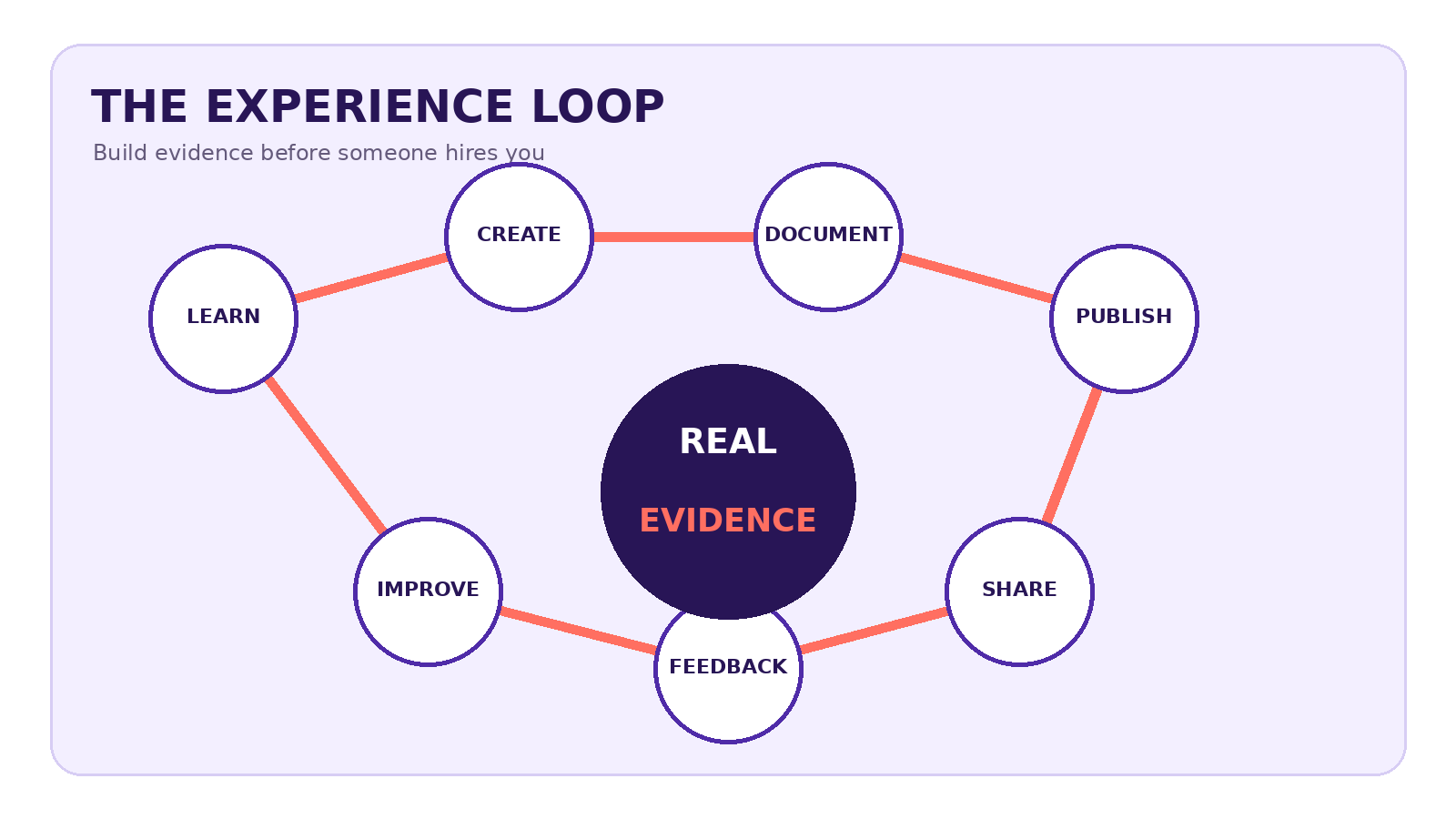 How beginners build portfolio experience through projects and feedback.
You can create evidence before you are hired by learning, building, publishing and improving.
A CV describes your background. A certificate confirms that you completed a course. A portfolio allows another person to inspect how you apply knowledge.
For a designer, that evidence may be brand identities, social-media graphics or website layouts. For a developer, it may be functioning applications, readable repositories and clear documentation. A data analyst may show cleaned datasets, dashboards and written insights. A marketer may present campaign plans, content systems, SEO audits or performance reports.
Portfolios can also work outside traditionally creative careers. A virtual assistant can demonstrate an inbox workflow, travel itinerary and spreadsheet tracker. An administrator can present an anonymised filing process or meeting template. A salesperson can show a prospecting plan, call framework and sample pipeline dashboard. Never upload confidential employer information merely to prove your ability.
The strongest beginner portfolio answers four questions quickly:
This is why random collections of certificates, screenshots and class assignments often feel weak. They show activity, but not necessarily capability or direction.
Before choosing a project, collect five to ten genuine job descriptions for the role you want. Highlight repeated tools, responsibilities and deliverables. You are not copying the advertisements; you are learning what evidence the market asks candidates to provide.
| Target role | Common skills to demonstrate | Useful portfolio evidence |
|---|---|---|
| Digital marketer | Campaign planning, content and analytics | Campaign plan, content calendar and performance report |
| Data analyst | Excel, SQL, dashboards and interpretation | Cleaned dataset, dashboard and business insights |
| Web designer | Responsive layouts, usability and accessibility | Working website with a project case study |
| Virtual assistant | Organisation, email, calendars and spreadsheets | Inbox workflow, itinerary and tracking system |
| Graphic designer | Typography, layout and visual identity | Brand system and campaign assets |
| Software developer | Problem-solving, code quality and documentation | Deployed application with a readable repository |
Choose projects with strong relevance, manageable scope and enough complexity to let you explain decisions. Building a giant application that never works is less persuasive than completing a smaller tool that solves one clear problem.
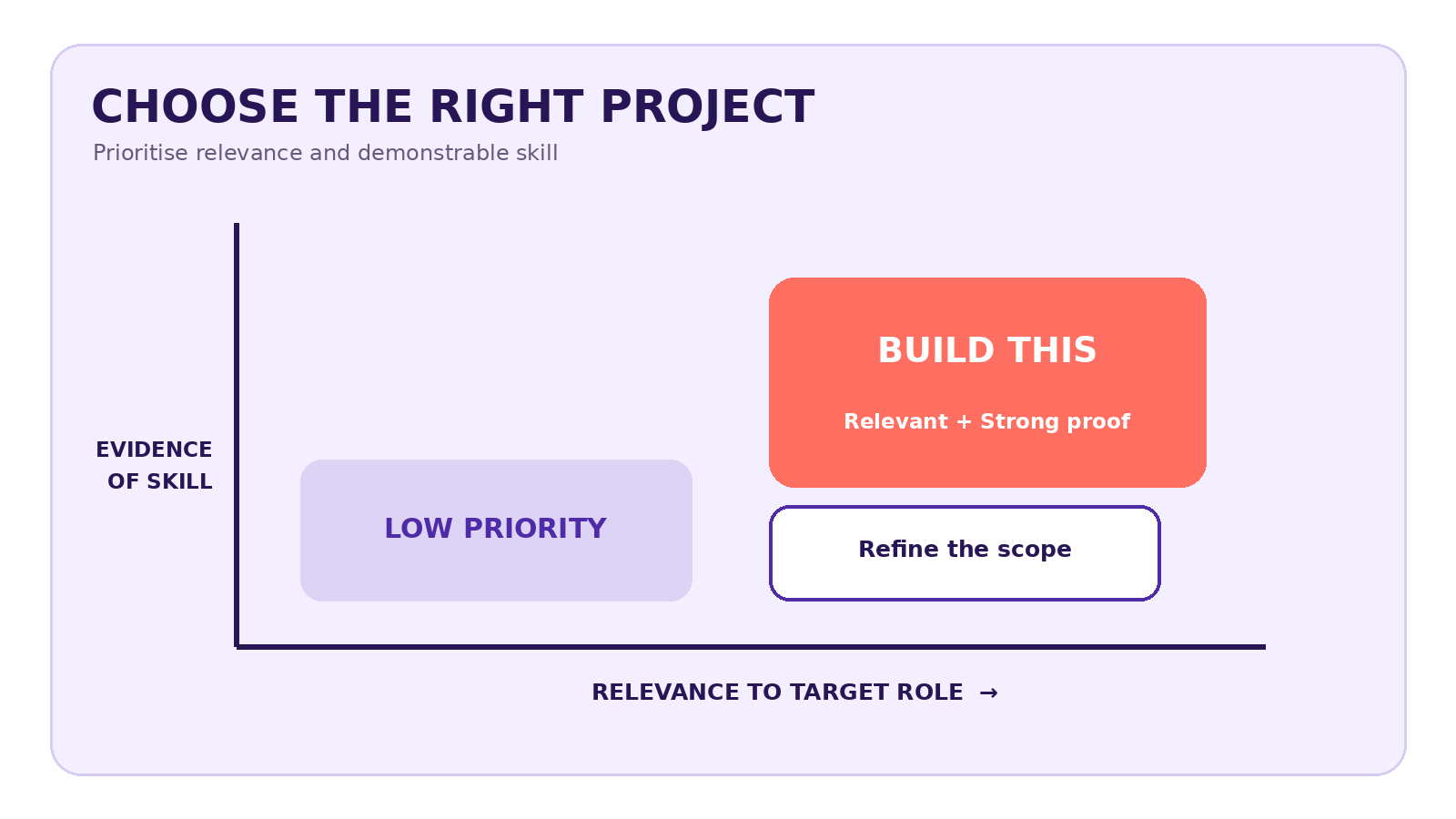 Matrix for choosing strong beginner portfolio projects.
Prioritise projects that are both relevant to your target role and strong enough to demonstrate real ability.
If you are still deciding which path to pursue, Vezill’s article on high-demand AI and digital skills for jobs and online income can help you compare directions. Once you choose, narrow the portfolio around that target rather than presenting yourself as a designer, analyst, developer and marketer all at once.
You may already have more usable evidence than you realise. Review academic projects, industrial attachments, volunteering, community responsibilities, student leadership, personal experiments, competitions, open-source contributions and work completed for a family business.
A university database project can become a case study if you explain the problem, design and testing. Social-media work for a church or community organisation can demonstrate content planning when you have permission to share it. Helping a small shop organise inventory can become an operations or spreadsheet example. Your contribution must be clear, particularly when other people were involved.
You can also create self-initiated work. Label it accurately using terms such as:
Do not invent a company testimonial, pretend a fictional brand hired you or add performance figures that never existed. A reviewer will usually respect a thoughtfully documented practice project more than a suspicious “client project” with no believable context.
Students who want real-life practice can explore Vezill’s legal online-income ideas for students. Technology students should also read why building digital assets can strengthen a career beyond relying only on employment.
A useful mock project begins with a believable problem. “Create a logo” is a task. “Create a simple identity for a neighbourhood bakery that needs to look friendly, affordable and readable on packaging” gives you a problem, audience and constraints.
Here are better starting points for different careers.
Build a 30-day content strategy for a fictional or consenting small business. Include the target audience, objectives, content pillars, sample posts and measurement plan. You could also conduct an SEO audit of a public website or create a sample campaign report using clearly labelled data. Vezill’s article on online opportunities for SEO specialists shows the types of outputs clients may value, while Inceptor’s Digital Marketing course provides a practical skills route.
Download a lawful public dataset, clean it and answer a business-style question. Present the cleaned data, KPI definitions, dashboard and a short explanation of what the numbers mean. Do not stop at attractive charts. Vezill’s detailed article on ways data analysts can earn online contains realistic service ideas, and Inceptor’s Data Analytics course covers project-based work with Excel, SQL, Power BI, Python and visualisation.
Build a small application that solves one problem: appointment reminders, inventory tracking, event registration or a simple budget workflow. Deploy it, add setup instructions and explain technical decisions. Vezill’s article on online opportunities for software developers can help you identify commercially useful projects. Beginners strengthening their foundation can compare Inceptor’s Python programming course and Software Development with AI course.
Create a complete but focused brand concept, landing page or social campaign. Explain audience, hierarchy, typography, accessibility and revisions. If redesigning an existing brand, label it as an unofficial concept and avoid implying endorsement. Vezill offers separate breakdowns of how graphic designers can package useful online work and how web designers can turn practical skills into online opportunities.
Create a mock inbox-triage system, meeting agenda, travel itinerary, customer-response library and spreadsheet tracker. Remove all real personal information from examples. Vezill’s article on becoming a virtual assistant in Kenya explains the practical skills a beginner can demonstrate before landing a first client.
A final image or link tells the reviewer what you produced. A case study explains why your work deserves attention.
Use this structure:
Problem → Goal → Constraints → Process → Decisions → Deliverable → Result → Reflection
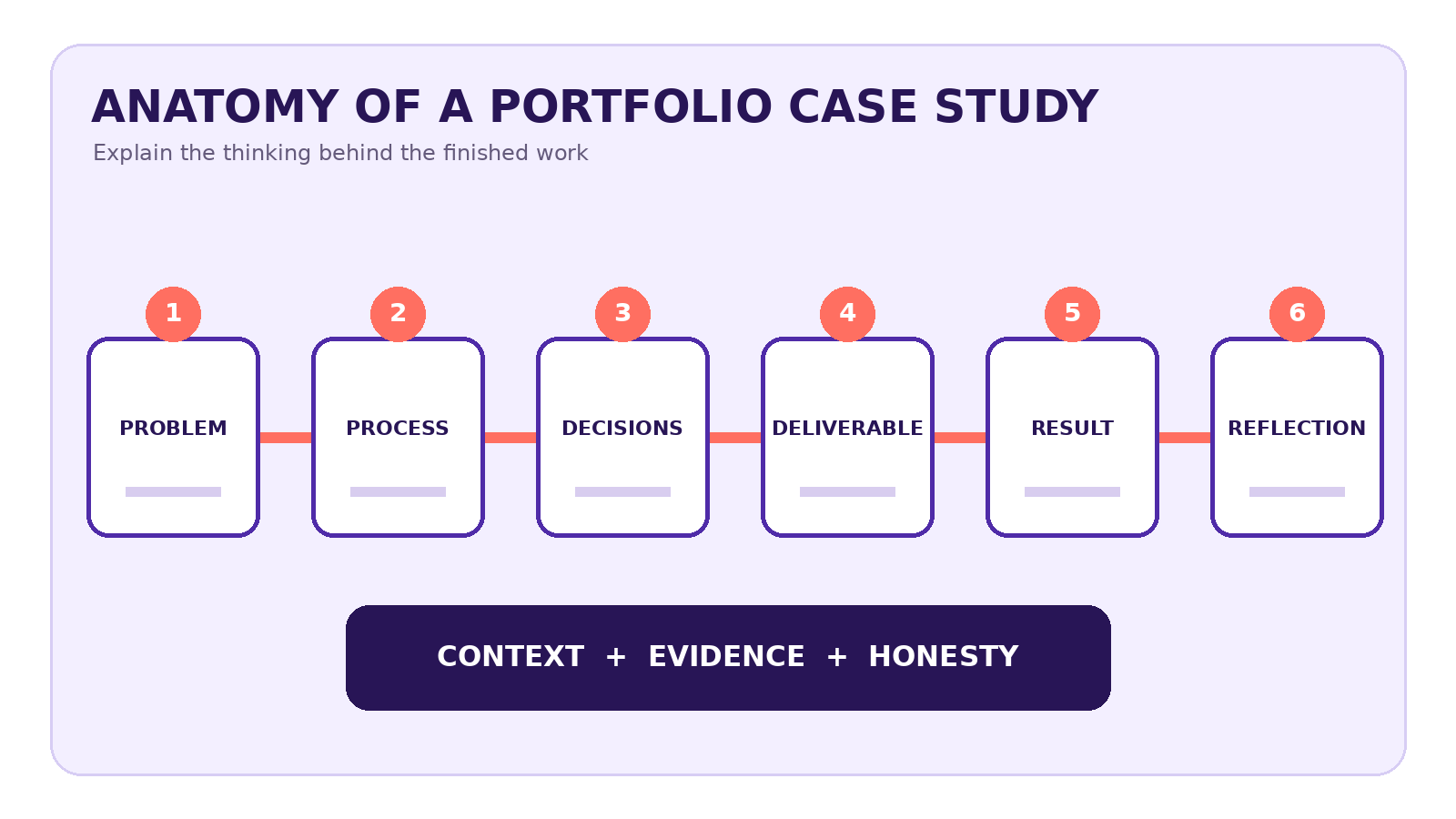 Structure of a professional portfolio case study.
A useful case study explains the thinking behind the final deliverable.
Suppose your weak project description says:
Sales Dashboard—Made with Power BI.
A stronger version could say:
Personal data-analysis project: I used a public sample retail dataset containing inconsistent dates, duplicate transactions and missing category labels. My goal was to create a simple management view of monthly sales, product performance and regional trends. I cleaned the data, documented the exclusions and defined four KPIs before building the Power BI dashboard. The analysis suggested that two high-revenue products also had unusually inconsistent month-to-month performance. Because this was sample data, I did not claim a commercial result. If deployed, I would validate the source data and track whether managers used the dashboard in monthly reviews.
That description proves far more than knowledge of a software menu. It shows data cleaning, business thinking, limitations and communication.
For a marketing project without real performance data, explain what you designed the campaign to achieve and what you would measure after launch. For a website, report verified technical measures, user feedback or requirements completed—not invented conversion growth. For design work, explain audience and layout decisions instead of claiming a fictional client loved it.
Keep the case study readable. A reviewer should understand the project quickly and choose whether to inspect the details.
Tutorial copies and template-based work can look impressive at first glance. Showing process helps prove that you understand the work and made independent choices.
Include selected research notes, sketches, wireframes, alternative directions, data-cleaning decisions, code documentation, testing results or revisions. You do not need to publish every rough file. Choose process evidence that explains how the project improved.
When presenting team or volunteer work, state your exact contribution:
I worked in a team of four. I was responsible for user interviews, the mobile wireframes and documenting feedback after the first test.
If you used a template, dataset, icon set or AI tool, identify it where relevant. Attribution does not weaken honest work. Hiding the source while implying everything was created from scratch does.
You do not need to code a custom website before sharing your first portfolio. Choose the platform that best displays your work and that you can maintain reliably.
| Platform | Best suited for | Main advantage | Limitation |
|---|---|---|---|
| GitHub | Developers and technical projects | Shows code, documentation and project history | Weak documentation makes good code hard to assess |
| Behance | Designers and visual creatives | Strong visual project presentation | Less suitable for detailed technical work |
| Notion | Mixed portfolios and case studies | Fast to publish and easy to organise | Custom presentation is limited |
| LinkedIn Featured | Professionals in many fields | Places evidence near your professional profile | Not a complete portfolio system by itself |
| Personal website | Most careers | Full control over presentation and navigation | Requires more setup and maintenance |
| PDF portfolio | Applications requesting one file | Easy to attach and control | Links and content can become outdated |
Whichever platform you choose, make it easy to use on a phone. Include a short introduction, target role, three to five featured projects, clear contact information and working links. Compress oversized images, use meaningful project titles and avoid distracting animation.
A developer using GitHub should add useful READMEs that explain the problem, setup and important decisions. A designer should present complete case studies rather than an endless image gallery. A mixed-skills professional can begin with Notion or a simple website and upgrade later.
There is no universal correct number, but most beginners do not need twenty projects. Start with three strong, relevant examples and expand toward five as your ability grows.
A balanced selection might include:
Remove older work when it no longer represents your current standard. Do not keep a weak project only because it took a long time. Quality, relevance and clarity matter more than volume.
A portfolio that nobody sees cannot help you. Add one clean link to your CV, LinkedIn profile and relevant applications. Test it in a private browser window to ensure reviewers do not need permission.
In an application, write naturally:
You can view three relevant case studies, including an Excel sales dashboard and customer-reporting workflow, at [portfolio link].
For a freelance proposal, link directly to the most relevant project rather than sending the client to a general homepage. If you are seeking employment, combine the portfolio with the broader steps in Vezill’s guide to getting a job in Kenya.
During an interview, do not merely open a project and say, “This is what I made.” Explain the problem, your role, an important decision, the result or limitation and how the experience relates to the vacancy. The portfolio becomes evidence supporting your answer.
AI can help you brainstorm briefs, create clearly labelled sample data, review writing, debug code and practise presenting a project. It cannot replace your understanding.
Use this prompt to generate a realistic project brief:
Create a beginner-friendly portfolio brief for an aspiring [target role]. The project should solve one realistic problem for a small Kenyan organisation, take approximately [time available], and demonstrate [three target skills]. Define the audience, goal, constraints and expected deliverables. Do not complete the project, invent performance results or create a fake testimonial. Include questions I should answer in the final case study.
Review every output and make your own decisions. Never upload confidential client or employer data. Do not present AI-generated work as entirely handmade, especially when authorship affects the assessment.
Vezill’s article on building an AI business without coding offers examples of turning problem-solving into demonstrable digital work. If you want to package genuine knowledge into a portfolio asset, compare Vezill’s lists of educational digital products for the Kenyan market and digital-product ideas that can be created with AI. Label experiments honestly and never invent sales.
The most damaging mistakes are not a lack of famous clients. They are poor relevance and weak credibility.
Avoid:
Check the portfolio on both a phone and computer. Ask another person to identify your target role and strongest project within one minute. If they cannot, simplify the presentation.
Complex projects may take longer, but you can create momentum in one week.
Day 1: Choose one target role. Collect five genuine job descriptions.
Day 2: Identify repeated skills and choose three project ideas.
Day 3: Select the strongest existing academic, volunteer or personal work. If none exists, begin the smallest relevant project.
Day 4: Finish or organise the first project. Capture clean screenshots and supporting evidence.
Day 5: Write the case study using the problem-to-reflection structure.
Day 6: Publish on the simplest suitable platform and add professional contact details.
Day 7: Test every link, request honest feedback and add the portfolio to your CV or LinkedIn profile.
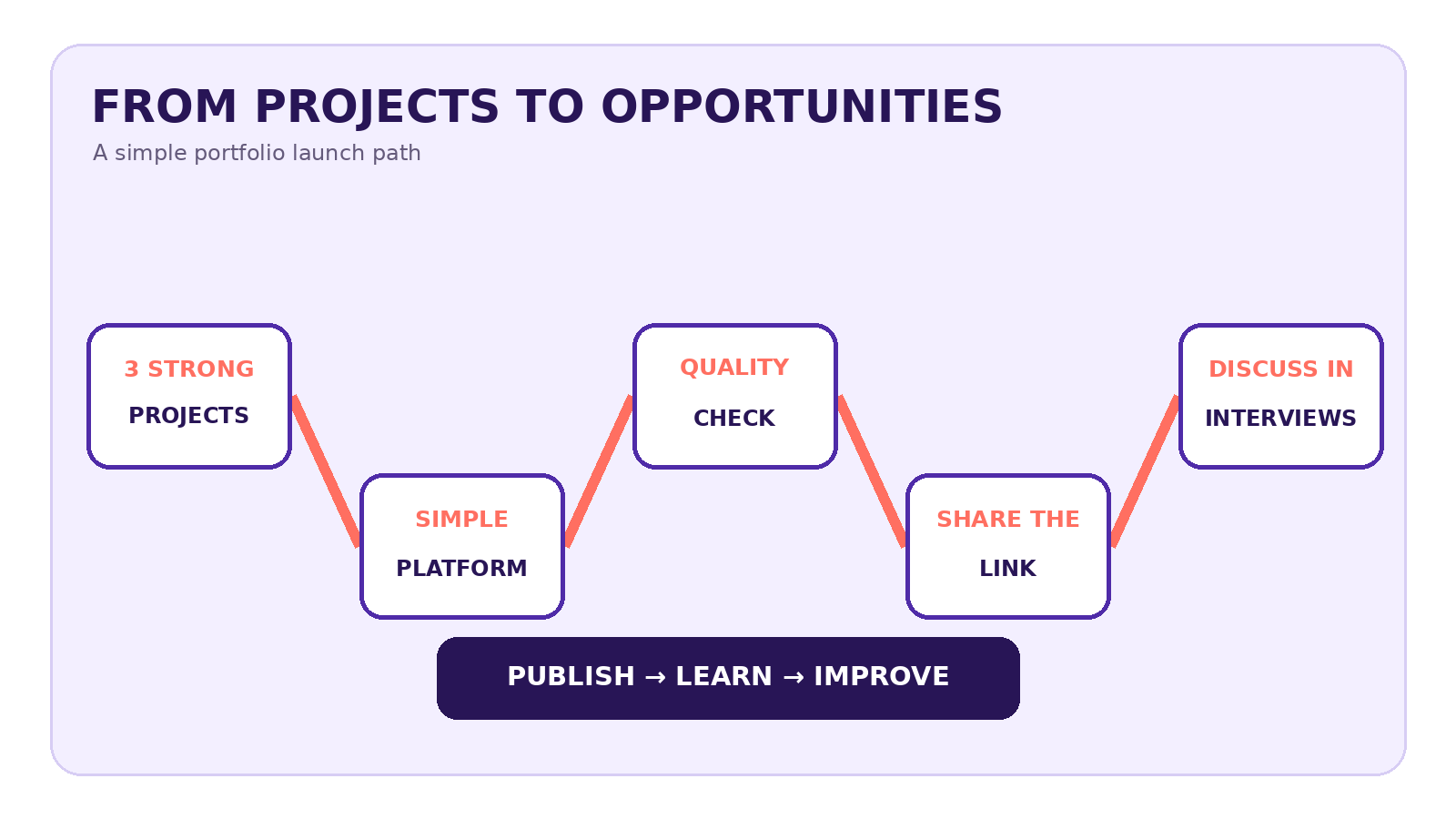 Beginner workflow for publishing and using a professional portfolio.
Start with three relevant projects, publish a simple version and use it wherever your skills are assessed.
The aim is not to finish your portfolio forever. It is to publish a credible first version and improve it as your work becomes stronger.
Yes. Use personal, academic, volunteer and clearly labelled practice projects. Never imply that a fictional organisation paid you.
Include a short professional introduction, three to five relevant projects, concise case studies, the tools or skills used and reliable contact information.
Yes, when they solve believable problems and are clearly labelled as mock, practice or self-initiated work. Do not attach fake results or testimonials.
Yes. Explain the original brief, your individual contribution, process, result and what you would improve. Obtain permission before sharing team-owned or restricted material.
No. A well-organised GitHub, Behance, Notion page, LinkedIn Featured section or PDF can be enough to begin. Choose a format suited to your work.
AI can support planning, sample data, debugging and feedback. You must understand, verify and honestly describe your own contribution.
Not every employer requests one, but relevant work samples can strengthen many applications. Administrative, sales and operations candidates can demonstrate workflows, reports and problem-solving without revealing confidential information.
Remove broken links, copied tutorials, irrelevant work, weak old projects, confidential material and anything you cannot confidently explain.
You do not have to wait for a job before creating evidence of your ability. Choose one target role, find a realistic problem, complete a manageable project and document your thinking. Publish it, ask for feedback and repeat until you have three strong examples.
Your first portfolio will not be perfect. It only needs to be honest, relevant, understandable and easy to inspect. That is enough to give an employer or client a better reason to begin a conversation.
Discover more articles you might be interested in
Learn where to find reliable step-by-step guides online, how to choose the right tutorial for your task, check whether it is current and follow instructions safely.
By Davie
Stop searching broad topics and start finding the exact knowledge you need. Learn how to define your problem, search smarter, choose reliable sources, verify answers and take action.
By Davie
Quick Knowledge or an online course? Learn when a focused answer is enough, when structured learning is better, and how to choose the right learning depth for your goal.
By Davie
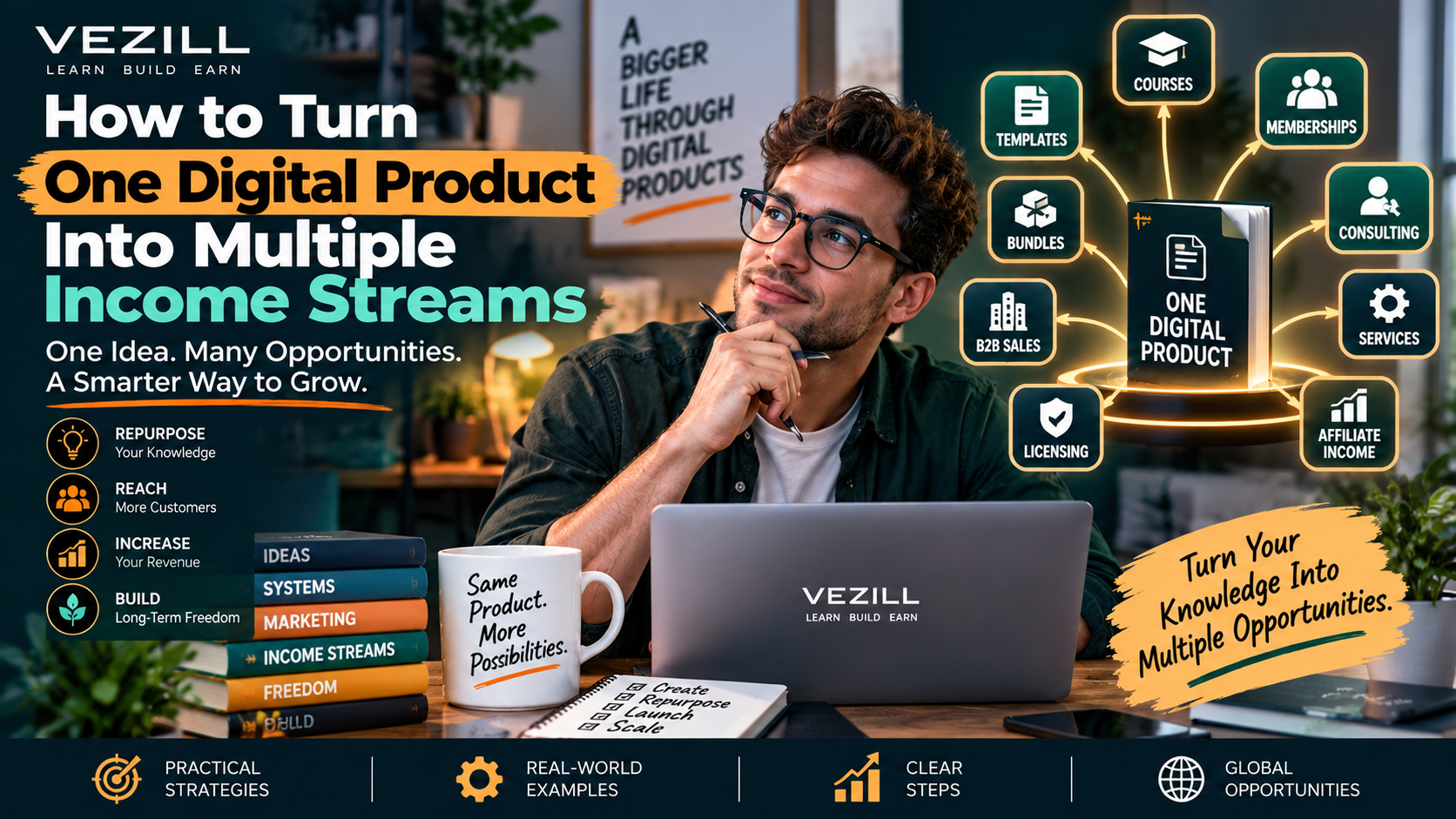
Learn how to turn one useful digital product into multiple income streams through premium versions, bundles, courses, licensing, services, subscriptions, B2B sales and complementary products.
By Davie
Get the updates, on newly released, popular & fast-moving MRR digital products
Up to Top
Comments All
Kelvin Kim
@kelvin_kim
This is such an encouraging and practical article! 👏 I especially loved the reminder that you don’t have to wait for your first job to gain experience. Starting with personal or practice projects and presenting them honestly can really help beginners showcase what they’re capable of. A very useful guide for anyone struggling with the “no experience” barrier! 💯
September 03,2026 At 09:50 PM