
Most people think LinkedIn is just for job hunting. In reality, it’s one of the most under-used sales channels for digital products — a network of professionals who actively read, learn, and buy tools that help their careers and businesses. Better still, its audience has money and pays premium prices. If you sell courses, templates, guides, or business resources, LinkedIn can become a steady, ad-free sales engine.
This guide shows you how to turn LinkedIn attention into digital-product sales. It works whether you’re a creator or a reseller — if you’re still deciding, see creator vs reseller: which model is better.
LinkedIn marketing for digital products works by building authority and trust with a professional audience, then converting that attention into sales. The system: (1) optimise your profile as a mini sales page, (2) pick one clear niche and audience, (3) post valuable content consistently, (4) grow your network with the right people, and (5) move warm connections to a lead magnet, DM, or product link.
LinkedIn buyers are professionals, freelancers, coaches, and decision-makers — they have budgets and pay premium prices, so it’s ideal for courses, templates, guides, and business-focused digital products.
Host the product they buy on Vezill for instant delivery, reviews, and resell rights.
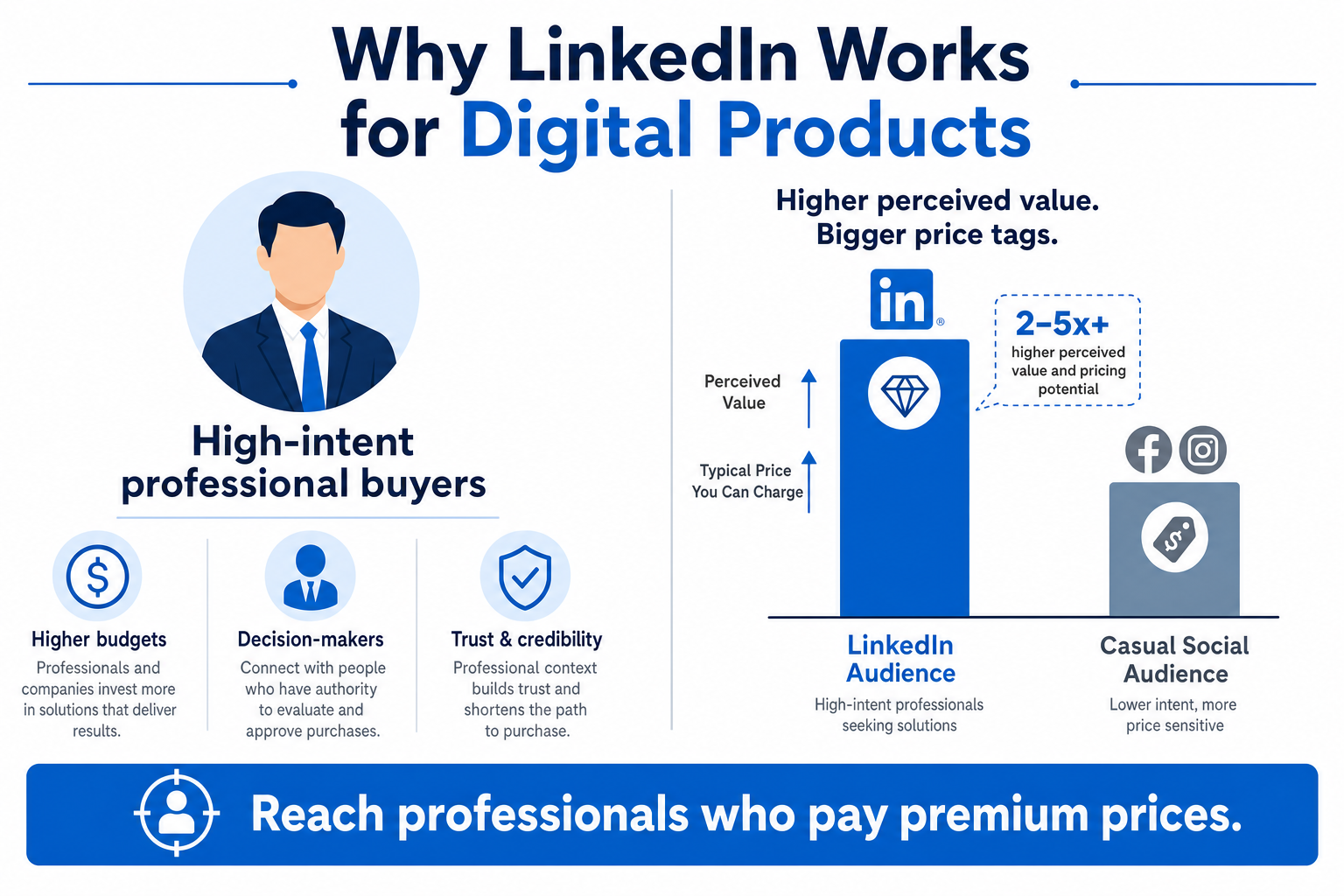 LinkedIn puts you in front of professionals who pay premium prices.
Buyers with budgets — professionals and businesses invest in things that make them better at their work.
High trust & authority — content positions you as an expert, and experts sell higher-priced products.
Low competition for creators — far fewer people post consistently here than on Instagram or TikTok, so it’s easier to stand out.
It’s especially powerful for professional niches — career coaches, consultants, and freelancers can all package their expertise into digital products. Not sure what to package? Start with 100 skills and talents you can monetise online.
On LinkedIn, your profile is your landing page. Every person who reads your content will check it — so make it sell.
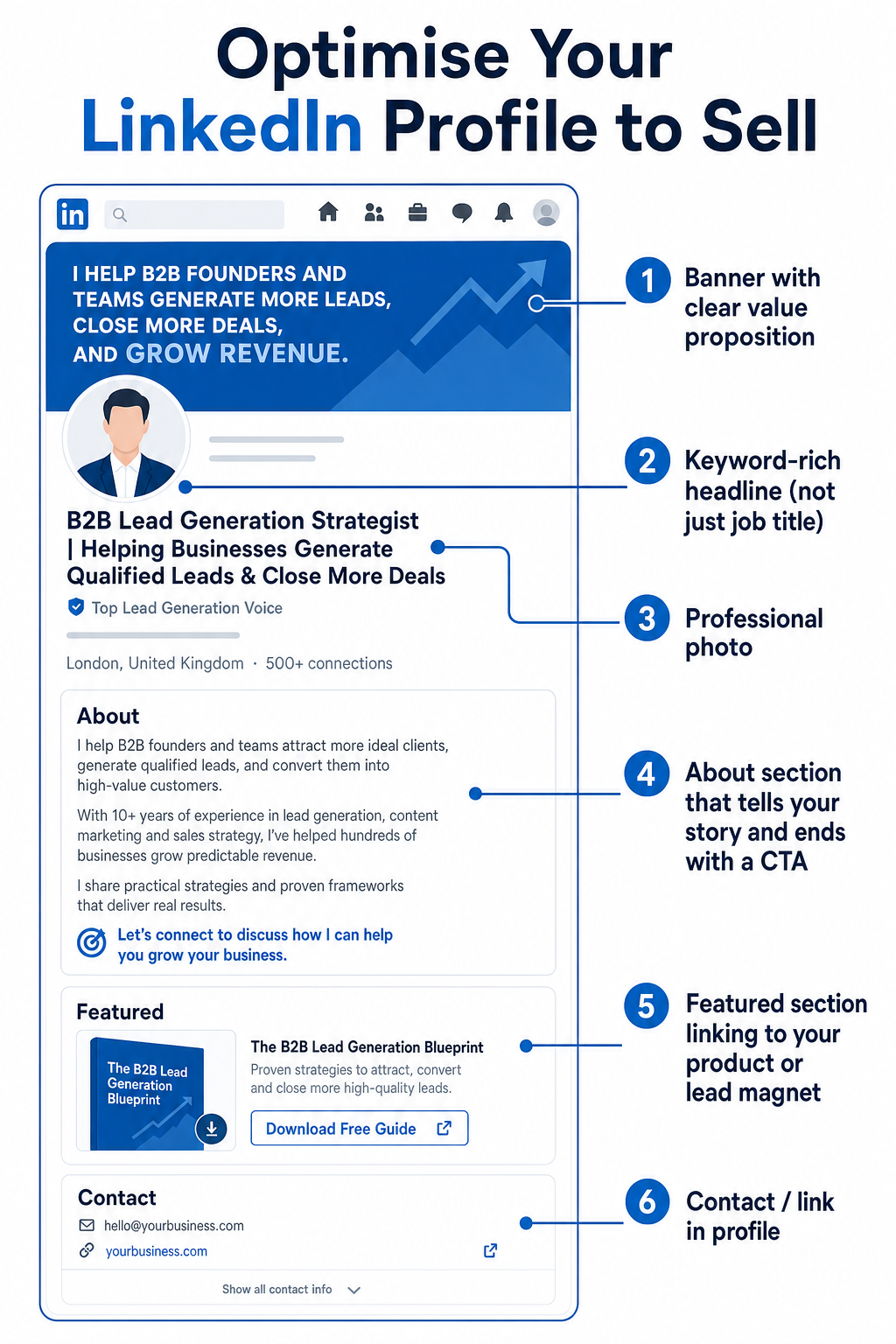 Optimise every profile section to turn visitors into leads.
Focus on the headline (say who you help and how, not just your job title), a story-driven About section that ends with a call to action, and the Featured section — use it to link straight to your product or a free lead magnet.
Authority comes from focus. Choose a single niche and a specific professional buyer, and make everything — profile, content, product — speak to them. A tightly targeted offer built around real demand converts far better; validate yours with AI content creation, courses and how to monetise if your niche is education-based.
Content is how strangers become followers and followers become buyers. On LinkedIn, the formats that work are practical and personal: how-to posts, lessons from experience, short stories, carousels/checklists, and case studies with real results. Give away genuinely useful insight — the more you help publicly, the more people trust you to sell to them.
Repurpose ruthlessly: one idea becomes a post, a carousel, and later a product. Learn the workflow in convert your content into digital products.
The 4-1-1 rhythm: For every promotional post, share four pure-value posts and one personal/story post. Give far more than you ask, and your occasional pitch lands without feeling salesy.
A thousand ideal-buyer connections beat ten thousand random ones. Send personalised connection requests to people in your niche, engage genuinely on their posts, and turn thoughtful comments into conversations. On LinkedIn, meaningful engagement in the comments is often where the selling quietly begins.
LinkedIn selling is simple: give value publicly, sell privately.
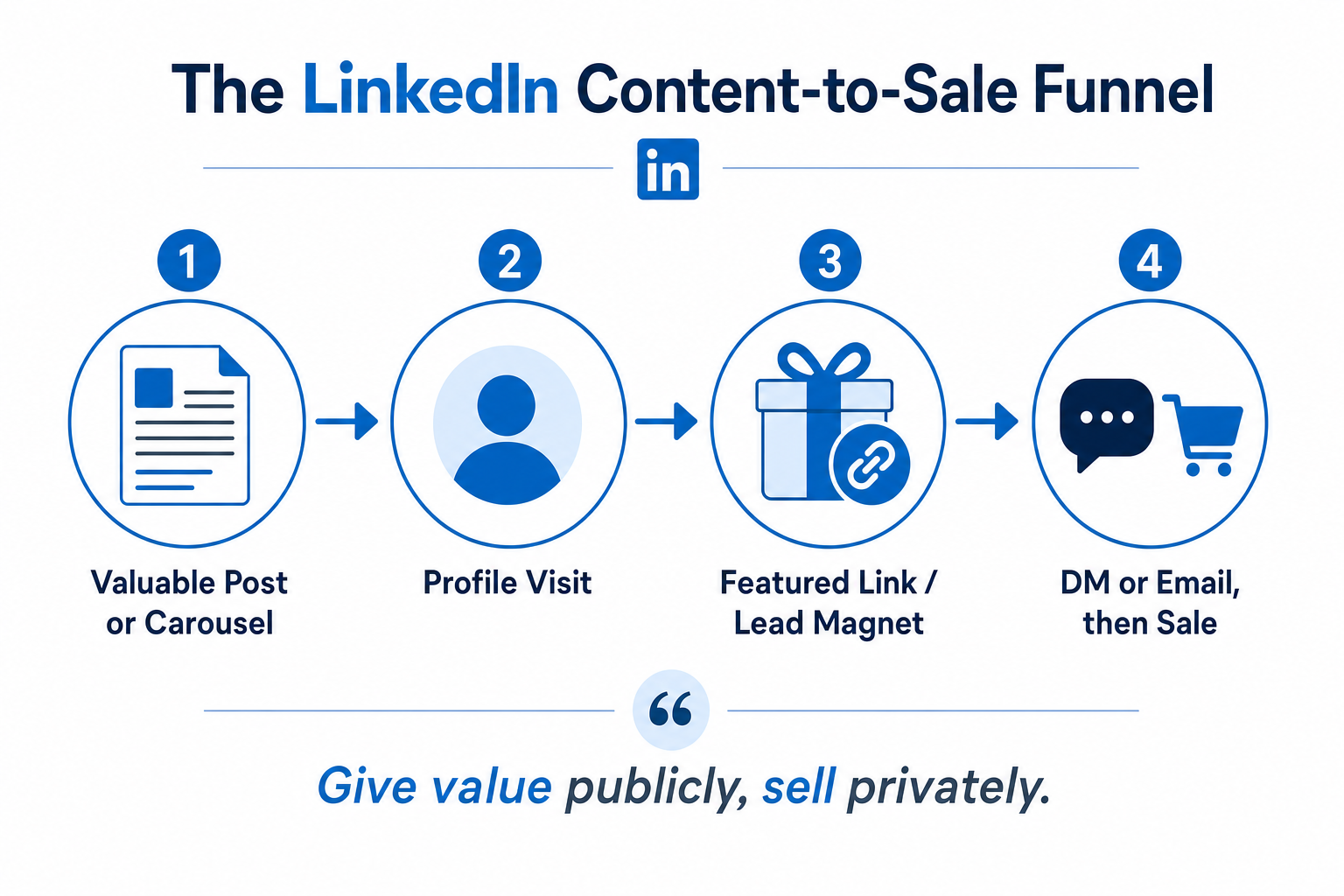 Value in the feed pulls people to your profile, link, and offer.
Capture interested readers with a free lead magnet and move them onto your email list — the highest-converting next step — using build an email list from zero. When you send people to your offer, make sure the page converts with the high-converting sales page guide, and understand the buying triggers at play in the psychology behind buying digital products.
Consistency beats intensity. A simple weekly rhythm compounds fast.
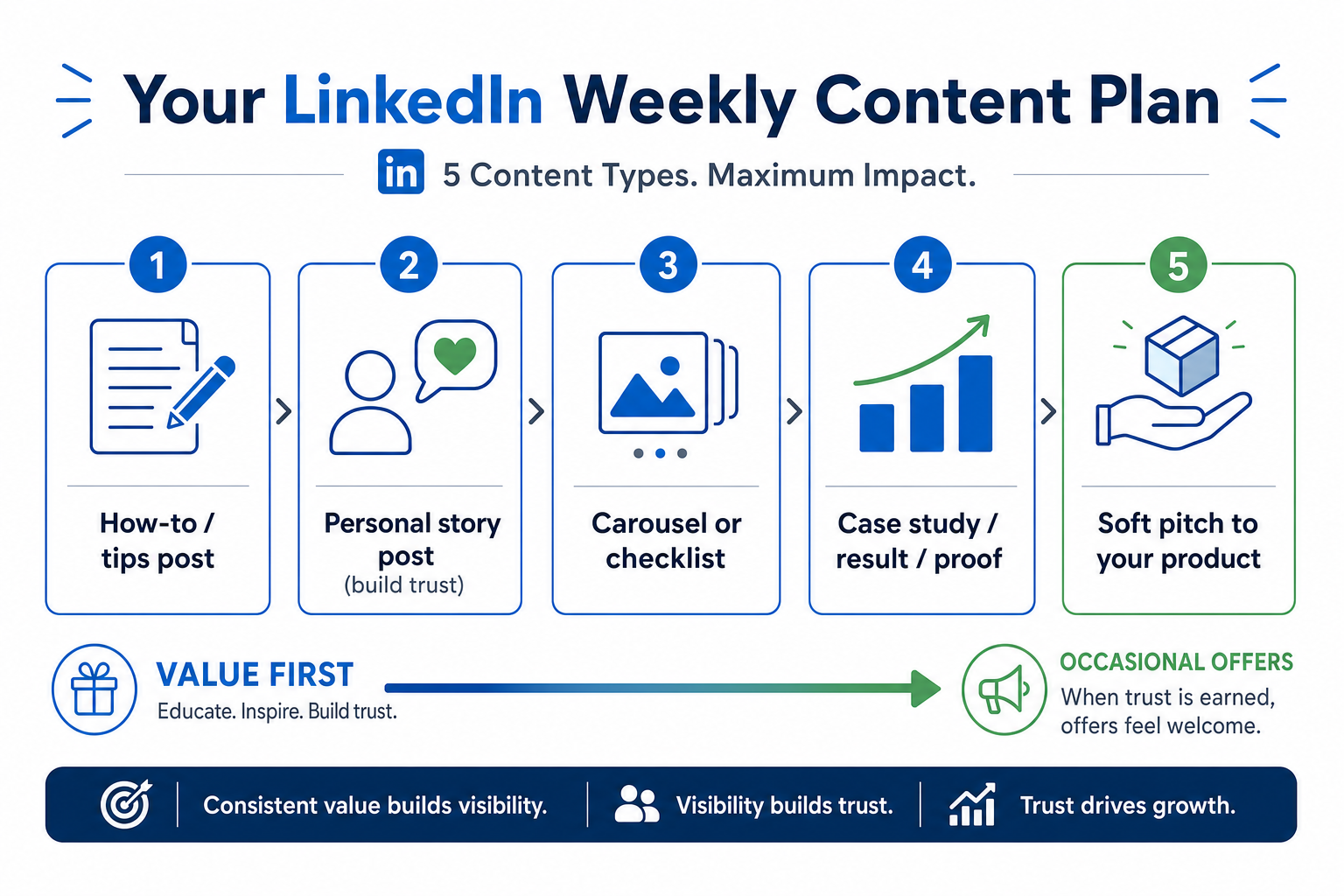 Rotate these five post types and stay top-of-mind all week.
Aim for 3–5 posts a week, engage 15 minutes daily, and pitch softly about once a week. This is one of the most reliable routes to your first 100 customers — and it pairs beautifully with other channels like Pinterest marketing for a well-rounded traffic mix.
LinkedIn buyers judge value, not just price — and they’ll pay more for products that clearly advance their careers or businesses. Don’t underprice premium, outcome-focused offers; set prices with intent using how to price digital products for maximum sales and profits. For course-style products, compare where to host and sell in best platforms to sell online courses, and package faster with the Ultimate Monetization Guide for Content Creators.
Treating your profile like a résumé — make it about the buyer you help, not your job history.
Only posting when you sell — give value first, consistently.
Spraying generic connection requests — target your niche and personalise.
Hard-pitching in DMs immediately — build a conversation before offering.
Being overly corporate — personal, human stories outperform stiff posts.
Inconsistency — sporadic posting kills momentum; show up weekly.
LinkedIn rewards those who show up, give value, and build genuine authority. Fix your profile so it sells, choose one niche, post helpful content consistently, grow a network of ideal buyers, and guide warm connections to a lead magnet and then your product. Because trust compounds here, the audience you build this quarter keeps buying for years.
Optimise your profile and publish one valuable post today. Momentum on LinkedIn starts with a single, useful sentence.
Yes. LinkedIn’s audience is largely professionals, freelancers, coaches, and decision-makers with budgets, which makes it excellent for selling courses, templates, guides, and business-focused digital products. Because you build authority through content, you can command higher prices than on casual social platforms.
No. A focused network of the right people converts better than a huge random audience. Consistent, valuable content plus genuine engagement with your niche will drive sales even with a modest but targeted following.
Around three to five posts per week works well, combined with 10–15 minutes of daily engagement on others’ posts. Consistency and value matter more than volume.
Give value publicly and sell privately. Share helpful content, let people visit your optimised profile, capture interested readers with a free lead magnet, and move the conversation to DMs or email before making a clear, low-pressure offer.
Business- and career-focused products perform best: online courses, templates, playbooks, guides, toolkits, and productivity or professional-skill resources. Anything that helps someone advance their career or grow their business is a strong fit.
Send warm connections to an email opt-in or directly to a product page with instant checkout. Hosting on a platform like Vezill means buyers can purchase and download immediately, and can even resell your product with Master Resell Rights.
Discover more articles you might be interested in
Learn How to Make Money Online Selling What You Know as a Digital Product
By Super Admin
How to Get Clients Online Without Paid Ads (2027)
By Davie
Pinterest Marketing for Digital Products
By Davie
How to Build an Email List From Zero (and Sell Your Digital Products)
By Davie
Get the updates, on newly released, popular & fast-moving MRR digital products
Up to Top
Comments All
Annita
@annita
I like how it shows that LinkedIn isn’t just for job searching, but can also be a great place to build trust and grow a digital product business. The tips are practical and easy to follow, especially the focus on sharing valuable content and building genuine connections. Definitely a useful guide for anyone getting started with LinkedIn marketing.
September 08,2026 At 09:26 PM
Jesse
@jesse
I’ve been seeing more people use LinkedIn beyond just job hunting, and this explains the marketing side pretty well. The focus on sharing useful content and building credibility before selling makes a lot of sense. A good read if you’re trying to grow on LinkedIn organically.
August 26,2026 At 11:35 PM