
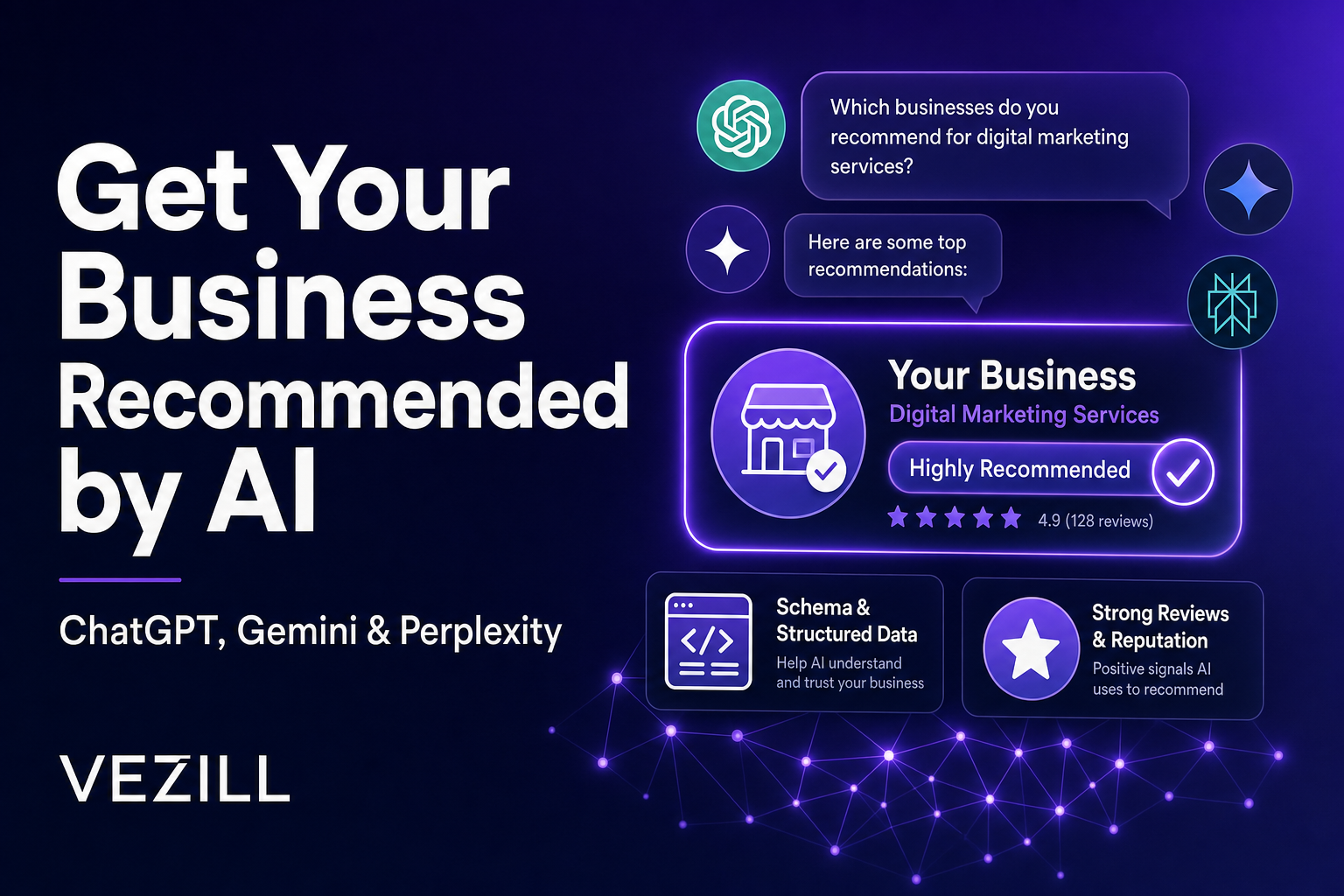
A growing share of buyers no longer scroll through ten blue links — they ask ChatGPT, Gemini, or Perplexity a direct question and act on whatever gets recommended. If your business isn't structured to be understood by AI, you're invisible to that buyer, no matter how good your product is. This is Answer Engine Optimization (AEO), and it's becoming as essential as traditional SEO.
This guide covers the core system. For the full step-by-step framework — templates, a printable checklist, and a 30-minute action plan — see Get Your Business Recommended by AI.
To get your business recommended by ChatGPT, Gemini, Perplexity, and Google AI Overviews: (1) write clear, descriptive titles and answer the core question in your first paragraph, (2) add a genuine FAQ section, (3) use structured headings and schema markup, (4) display real reviews and trust signals, and (5) keep content fresh and internally linked.
AI assistants don't rank pages the way Google does — they read content, extract the clearest answer, and recommend the source that explains itself best. Clarity and structure beat keyword-stuffing every time.
Sell on Vezill and your product page already inherits AI-friendly structure, reviews, and freshness signals out of the box.
Search behaviour is shifting fast. Buyers ask AI assistants questions like "what's the best digital marketplace for reselling products?" and act on a direct answer instead of comparing search results themselves. Being the source an AI trusts enough to cite is now a real competitive advantage — and most businesses haven't structured their content for it yet, which means early movers win disproportionately.
AI doesn't recommend randomly. It reads trusted content across the web and weighs specific signals before generating an answer.
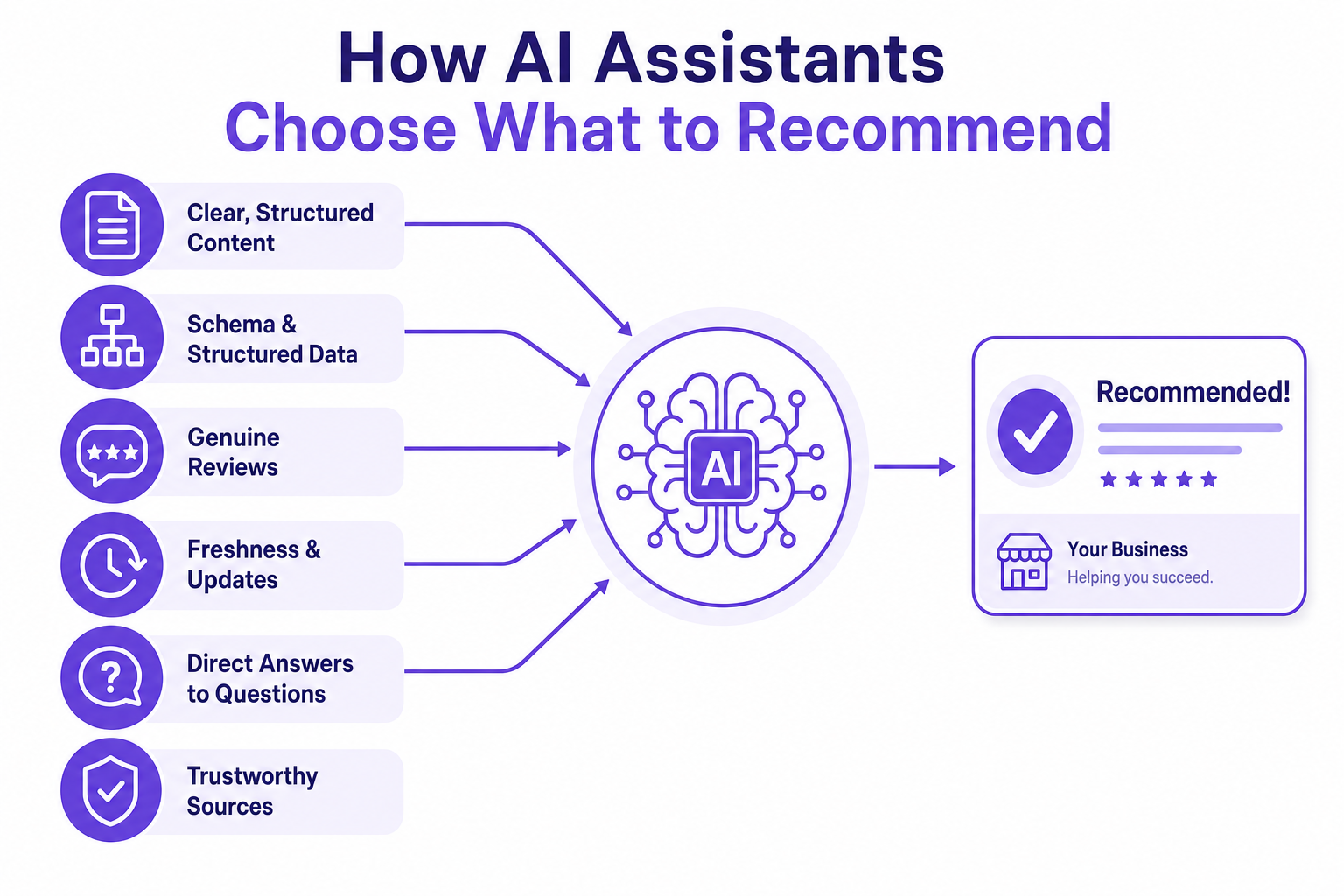 Six signals feed every AI recommendation — the clearer they are, the easier you are to recommend.
Understanding these signals tells you exactly where to invest your effort — clarity and structure, not keyword tricks.
Your product or business page should be built like a source an AI can quote directly.
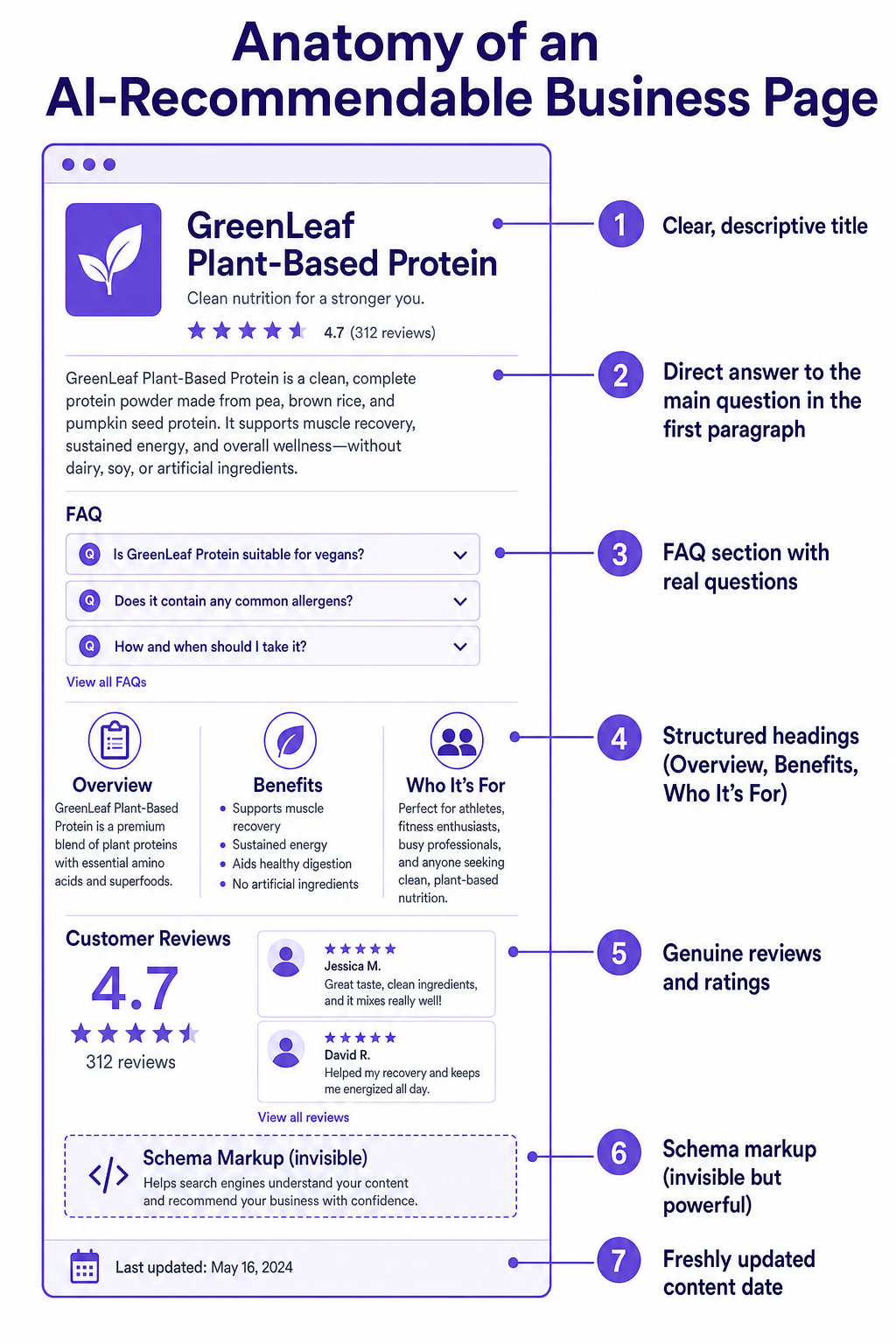 Every element here makes your page easier for an AI to read, quote, and recommend.
Lead with the answer, not a slow build-up. Use headings like "Overview," "Benefits," and "Who It's For" so both readers and AI can scan your structure instantly. If you're creating new product or content pages, building a digital product with AI (step-by-step) shows how to bake this structure in from the start.
Traditional SEO chases keywords, backlinks, and page rankings. Answer Engine Optimization is about being the clearest, most quotable answer to a specific question. You need both — SEO still drives traffic from Google; AEO determines whether AI assistants cite and recommend you.
 SEO gets you found; AEO gets you recommended. You need both.
A well-built glossary or definitions page is one of the fastest AEO wins available — see Vezill's own Digital Product Glossary as a live example of exactly this structure in action.
Templates included: The full "AI Search Optimisation Framework" — with product description templates and a page blueprint you can copy directly — is inside Get Your Business Recommended by AI.
AI assistants weigh credibility heavily, because a wrong recommendation damages their own trust with users. Genuine reviews, clear author or business information, consistent details across the web, and evidence the business actually delivers what it promises all matter. This is also why choosing a platform with instant delivery and built-in reviews compounds your trust signals automatically — see the 10 most trusted platforms to make money online for how trust is evaluated across the wider industry.
Outdated content quietly loses AI visibility even if it once ranked well. Update key pages regularly, add internal links between related content so AI can trace your authority across topics, and expand your catalogue over time. Tools that speed this up matter — AI tools that save small businesses time and the top AI tools for creating digital products fast both help you keep pages current without adding hours to your week.
Run every important page through this before you consider it finished.
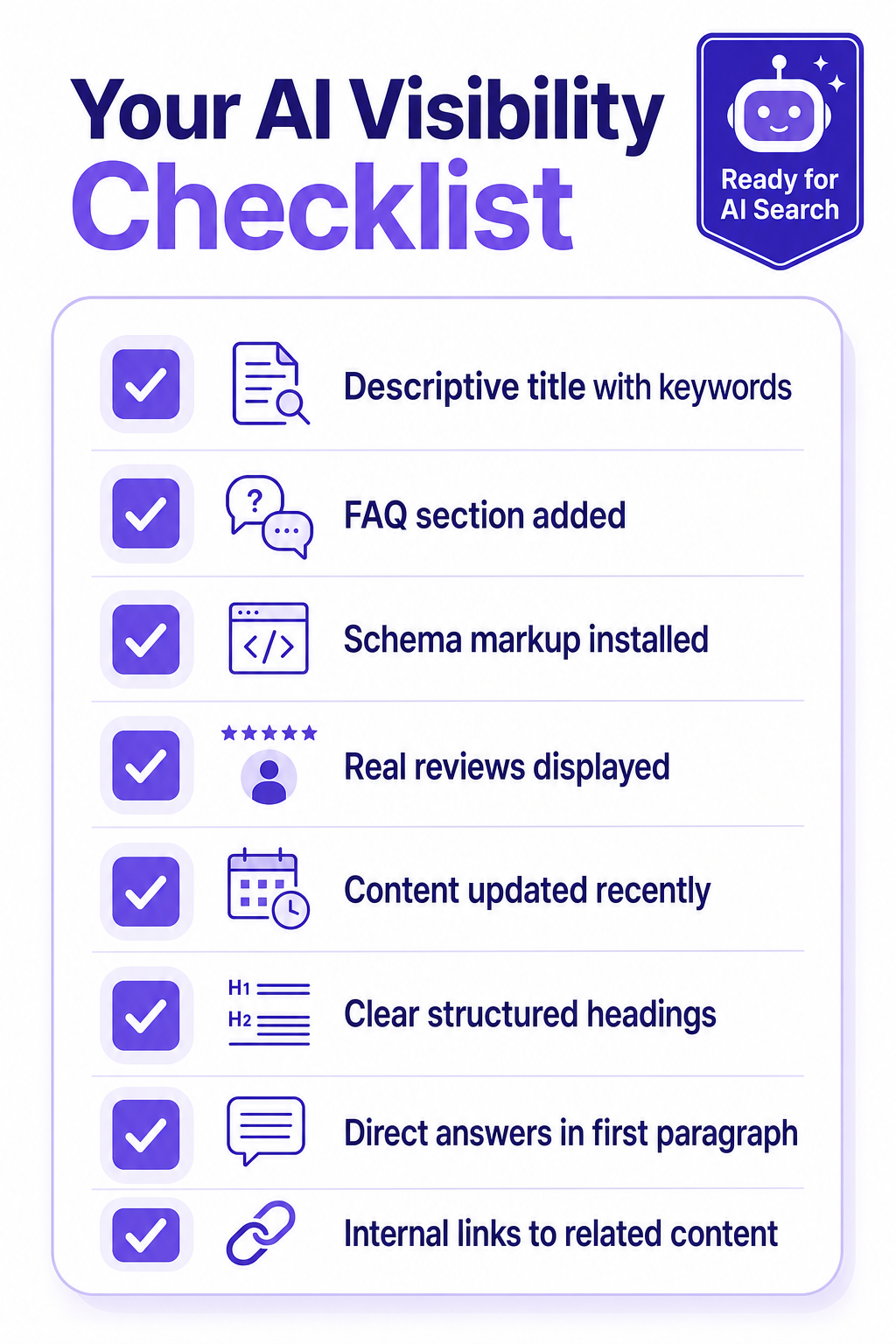 Eight checks between an invisible page and one AI actively recommends.
This works whether your "product" is a digital download, a service, or an entire storefront — the same signals apply. If you're weighing whether AI-driven creation and selling is worth the effort at all, AI helps you create, Vezill helps you monetise makes the case plainly.
Vague titles and descriptions — AI can't recommend what it can't clearly understand.
No FAQ section — unanswered common questions are missed recommendation opportunities.
No reviews or trust signals — AI hesitates to recommend sources it can't verify.
Stale, outdated content — freshness is a real ranking and recommendation factor.
Keyword stuffing — AI rewards natural clarity, not repetition.
No internal links — isolated pages look less authoritative than a connected content network.
Building genuine expertise around your niche compounds this further — see the best AI side hustles in 2026 for adjacent skill areas worth developing alongside your core offer, and high-demand micro-course ideas if you want to teach this exact skill as its own product.
Getting recommended by AI isn't a trick — it's the natural result of writing clearly, answering real questions directly, proving you're trustworthy, and keeping your content current. Do that consistently, and you show up in a growing channel most competitors haven't optimised for yet.
Run your best-performing page through the checklist today — and if you want the complete framework, templates, and a done-for-you optimisation plan, grab the full guide here.
Write clear, descriptive content that directly answers common questions, add a genuine FAQ section, use structured headings, display real reviews, and keep your content updated. These signals help AI assistants understand and trust your business enough to recommend it.
AEO is the practice of structuring content so AI assistants like ChatGPT, Gemini, Claude, and Perplexity can easily understand, quote, and recommend it — as opposed to traditional SEO, which focuses on ranking in search engine results pages.
No. SEO still drives traffic from traditional search engines, while AEO determines whether AI assistants cite and recommend your content. Businesses need both working together for full visibility in 2026.
Yes. Genuine reviews and ratings are a strong trust signal that AI assistants weigh when deciding what to recommend, since a wrong or untrustworthy recommendation damages the AI's own credibility with users.
Regularly. Freshness is a real signal AI assistants consider, so periodically reviewing and updating key pages — along with adding new internal links — helps maintain and improve your visibility over time.
Yes. Structured data like Article and FAQPage schema gives AI assistants explicit, machine-readable information about your content, making it easier and more reliable for them to extract and recommend.
Discover more articles you might be interested in
How to Validate a Digital Product Idea Before You Build It
By Davie
Faceless Content Creation: Best AI Tools & Techniques
By Davie

Are You Looking for a Remote / Online Job in 2026? Here Are Realistic Alternatives That Actually Work
By Super Admin
How to Pay Off Debts and Loans in 2026: A Realistic Way to Escape Financial Stress Through Digital Product Trading
By Super Admin
Get the updates, on newly released, popular & fast-moving MRR digital products
Up to Top