
The internet has more information than ever before. But when you need to do something, fix something, make something, learn a useful skill or solve a specific problem, more information is not necessarily what you need.
You need the right knowledge, organized in the right order and focused on the result you want to achieve.
That is where practical how-to guides and structured knowledge become valuable.
Instead of spending hours searching through websites, videos, social media posts and conflicting opinions, a good practical guide brings the important information together and shows you what to do step by step.
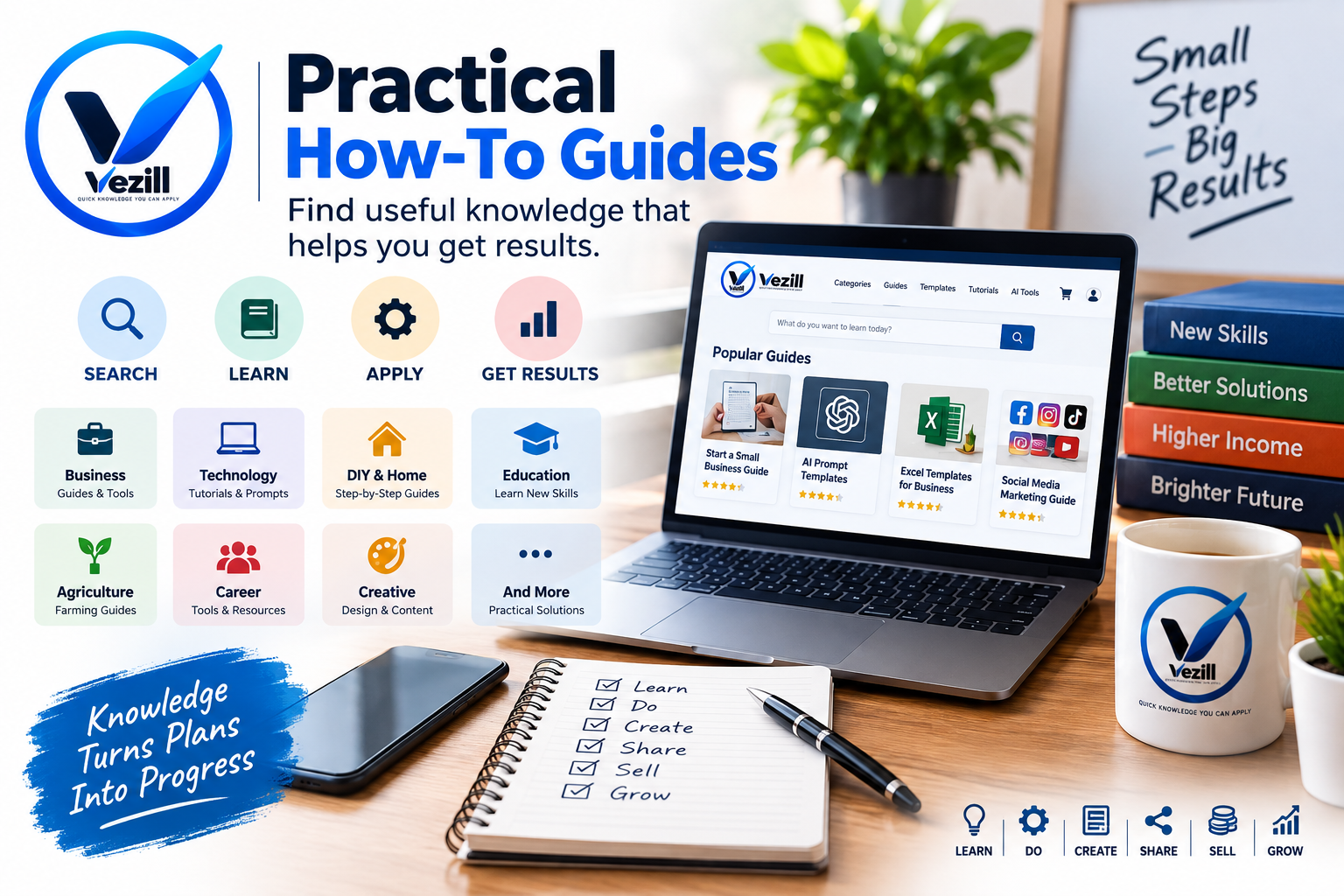
VEZILL is a digital knowledge marketplace built around this idea: helping people find practical knowledge they can learn, apply and use to achieve specific results.
Whether you want to learn a skill, complete a task, solve a problem, improve a process or turn your own knowledge into something valuable, the goal is simple:
Learn → Do → Create → Share → Sell → Grow
Practical knowledge is knowledge you can use to do something or achieve a specific result.
It goes beyond simply knowing facts.
For example, reading about digital marketing may give you information.
But a step-by-step guide showing you how to create and launch your first Facebook advertising campaign gives you practical knowledge.
Knowing what a business budget is gives you information.
A spreadsheet template accompanied by instructions showing you how to create and manage your monthly business budget gives you something you can immediately apply.
The difference is actionability.
Practical knowledge answers questions such as:
How do I do this?
How do I make this?
How do I fix this?
How can I improve this?
What steps should I follow?
What tools do I need?
What mistakes should I avoid?
How can I achieve this result faster?
Good practical knowledge reduces the gap between “I want to do this” and “I now know what to do.”
A practical how-to guide is structured content that explains how to complete a specific task, solve a problem or achieve an outcome.
It normally takes the reader from a starting point to a desired result.
For example, someone might search:
How do I write a business proposal?
A useful how-to guide should not spend most of its time explaining the history of business proposals.
It should show the person:
What information they need.
How the proposal should be structured.
What each section should contain.
How to present their offer.
Common mistakes to avoid.
A practical example or template.
What to do after completing the proposal.
That is results-oriented knowledge.
Search engines, AI assistants and social platforms can provide enormous amounts of information very quickly.
But access to information creates another problem:
Which information should you actually follow?
You can search one question and receive hundreds of answers.
You may then need to compare articles, watch several videos, read comments, evaluate conflicting recommendations and determine which information applies to your situation.
A well-designed practical guide reduces this fragmentation.
Instead of:
Search → Search Again → Compare → Guess → Try → Search Again
you want:
Problem → Relevant Knowledge → Clear Steps → Action → Result
This is particularly valuable when you want to get something done rather than simply research a subject.
Practical knowledge can exist in almost every field.
A small-business owner may need to know:
How do I calculate whether my business is actually making a profit?
A practical knowledge pack could contain:
a simple profit calculation guide;
an income and expense spreadsheet;
worked examples;
instructions for using the spreadsheet;
a monthly business review checklist.
The buyer isn't primarily purchasing a spreadsheet.
They are purchasing a faster way to understand and manage their business finances.
Someone may know that ChatGPT can help businesses but still not know how to use it effectively.
A practical guide could show:
How to use AI to respond to customer enquiries faster
and provide:
the process;
recommended prompts;
prompt templates;
examples;
customization instructions;
common mistakes;
a workflow the business can implement.
The value isn't merely the prompts.
The value is the result the prompts help produce.
Consider someone preparing for an interview.
They don't necessarily need a 300-page book about employment.
They may need:
How to Prepare for a Job Interview in 24 Hours
A practical knowledge product could contain a preparation checklist, common interview questions, answer frameworks, company-research process and practice exercises.
That's knowledge designed around a specific result.
Someone searching:
How do I speed up a slow WordPress website?
may benefit from a practical troubleshooting guide that takes them through backups, image optimization, caching, plugins, databases and hosting checks in the correct order.
Instead of collecting disconnected tips from ten websites, the user gets a process to follow.
Practical knowledge doesn't have to be highly technical.
People constantly need instructions for things such as:
repairing common household problems;
maintaining equipment;
preparing particular foods;
using software;
organizing finances;
creating documents;
growing plants;
caring for household items;
improving business processes;
completing administrative tasks.
If somebody repeatedly asks “How do I...?”, there may be an opportunity for useful structured knowledge.
A common mistake is to think useful digital knowledge must always be an ebook or online course.
It doesn't.
The best format depends on the problem.
Practical knowledge can be packaged as:
PDF guides for processes that need detailed explanations.
Video tutorials when users need to see something being demonstrated.
Templates when the user needs to create a particular output quickly.
Checklists when accuracy and completeness matter.
Spreadsheets when calculations, tracking or planning are involved.
AI prompts when the goal is to complete repetitive or knowledge-intensive tasks faster.
Worksheets when the user needs to work through a process.
Micro-courses when a skill can be taught through several short lessons.
ZIP knowledge packs when multiple resources work better together.
The format is secondary.
The fundamental question should always be:
What result will this help someone achieve?
Structured knowledge is useful information that has been selected, organized and presented logically so that another person can understand and apply it more easily.
Imagine that you want to learn a particular skill.
The information you need may already exist somewhere online.
But it could be spread across:
15 websites;
12 YouTube videos;
several social-media posts;
discussion forums;
AI conversations;
books;
personal experience.
The problem is no longer simply accessing information.
The problem is organizing the right information into a reliable process.
Structured knowledge attempts to solve this.
A strong knowledge product may organize the subject as:
Objective → Requirements → Steps → Examples → Tools → Mistakes → Checklist → Result
This makes knowledge easier to consume and apply.
There is an important difference.
Information tells you about something.
Practical knowledge helps you do something.
For example:
“Excel is commonly used for business data analysis.”
That's information.
“Here is the spreadsheet, formulas, sample data and five steps for creating your monthly sales dashboard in Excel.”
That's practical knowledge.
Similarly:
“AI can help businesses create content.”
That's information.
“Here are the prompts, workflow, content calendar and editing checklist for creating 30 days of social-media content using AI.”
That's actionable knowledge.
The second form usually gets the user closer to a measurable result.
This is one of the problems VEZILL is designed to address.
VEZILL is a marketplace for practical digital knowledge, how-to guides, tutorials, templates, tools and other digital resources designed to help people solve problems and achieve specific outcomes.
Instead of focusing only on the file being sold, VEZILL encourages creators to focus on the knowledge and result contained inside the product.
You might come to VEZILL because you need to:
learn a useful skill;
complete a task;
solve a business problem;
understand a process;
find a ready-to-use template;
follow a step-by-step tutorial;
get useful AI prompts;
acquire knowledge that saves you research time.
The objective is straightforward:
Search → Find → Learn → Apply → Result
Not every digital guide is useful simply because it contains information.
Before buying practical knowledge, ask:
Does it solve the problem I actually have?
The title and description should clearly explain the intended result.
Is it actionable?
Look for steps, examples, demonstrations, templates or instructions rather than vague theory.
Is it suitable for my level?
A beginner may require a different resource from an experienced professional.
Is the information credible?
Consider the creator's expertise, experience, explanation and available product information.
Is it current where currency matters?
Technology, regulations, AI tools, software and online platforms can change quickly.
Can I apply it?
The ultimate value of practical knowledge comes from implementation.
The other side of the knowledge economy is creation.
You probably know how to do something that somebody else wants to learn.
It might come from your:
profession;
business;
career;
education;
hobby;
technical skill;
personal experience;
creative ability;
practical expertise.
You don't need to know everything about a subject.
You need to be able to credibly help a defined audience achieve a defined result.
For example, instead of creating:
A Guide to Microsoft Excel
you could create:
How to Create a Monthly Sales Report in Excel
Instead of:
Social Media Marketing
create:
How to Create a 30-Day Social Media Content Calendar Using AI
Instead of:
Photography Guide
create:
How to Take Professional Product Photos Using Your Smartphone
Specific knowledge makes the value easier to understand.
Start with a problem rather than a product.
Ask:
What can I help someone accomplish?
Then define the outcome.
For example:
“After using this guide, the reader should be able to create a professional quotation for their small business.”
Next, document the process.
What does the person need?
What should they do first?
What comes next?
Where do beginners usually make mistakes?
What examples would make the process clearer?
What template, checklist or tool would make implementation easier?
Then package the knowledge in the format that best delivers the result.
That might be a PDF, video tutorial, template, spreadsheet, micro-course or combination of resources.
You can then publish the finished digital knowledge product on a marketplace such as VEZILL, where people searching for useful knowledge can discover it.
Yes, practical knowledge can be monetized when people perceive sufficient value in the problem it solves.
However, publishing a digital product does not guarantee sales or income.
Demand, quality, credibility, pricing, competition, marketing and the usefulness of the product all influence results.
A better starting question than:
“What ebook should I sell?”
is:
“What problem do people have that my knowledge can help them solve?”
This changes the creator's thinking from creating content to creating value.
If people repeatedly search for instructions, templates, processes, tutorials or solutions around a particular problem, there may be an opportunity to package high-quality knowledge around that need.
AI can generate information extraordinarily quickly.
That does not make human knowledge irrelevant.
It changes where value lies.
Generic information is becoming easier to produce.
Greater value increasingly comes from things such as:
context, expertise, experience, verification, organization, specialization, practical examples and implementation.
AI might explain hundreds of ways to market a small business.
But a carefully developed resource showing a particular business owner exactly what to do on Monday, Tuesday, Wednesday and Thursday—with templates, prompts, examples and measurement tools—provides a different kind of value.
The future of useful knowledge is therefore not necessarily more information.
It is often:
Better organized knowledge that helps people get results faster.
The internet is excellent at helping you discover information.
AI is excellent at helping you explore, summarize and generate ideas.
Practical knowledge adds another layer:
implementation.
When you need to accomplish something, look for knowledge that answers four questions:
What should I do?
How should I do it?
What should I avoid?
How will I know I've achieved the result?
That's the difference between consuming information and using knowledge.
VEZILL is building a marketplace where knowledge is packaged around usefulness, application and results.
Find practical how-to guides, tutorials, templates, digital tools, AI prompts, checklists, micro-courses and other structured knowledge created to help you move from a question to action.
And if you have useful knowledge of your own, you can package what you know into a digital product and make it available to people who need it.
Don't just search for more information. Find knowledge you can use.
VEZILL — Quick Knowledge You Can Apply.
Practical knowledge is knowledge that can be applied to complete a task, solve a problem, develop a skill or achieve a particular outcome. It usually focuses more on implementation than theory.
A how-to guide is a structured set of instructions that explains how to complete a particular task or achieve a desired result.
Structured knowledge is information that has been selected, organized and presented logically so that users can understand and apply it more efficiently.
Practical how-to guides can be found through specialist websites, educational platforms, creators and digital knowledge marketplaces such as VEZILL. Evaluate the relevance, credibility, currency and practical usefulness of any resource before relying on it.
Practical knowledge can be packaged as how-to guides, tutorials, templates, spreadsheets, checklists, AI prompts, worksheets, micro-courses, videos and other digital resources.
Yes. If you have useful expertise, experience or a skill that can help other people solve a problem or achieve a result, you can package that knowledge into a digital product and sell it online.
A strong digital knowledge product normally addresses a specific problem, targets a clearly defined audience, provides actionable instructions and makes the expected outcome clear.
It depends on the user's objective. An ebook can provide broad or detailed knowledge, while a focused how-to guide is usually designed around completing a particular task or achieving a specific outcome. The best format is the one that delivers the required result effectively.
Discover more articles you might be interested in
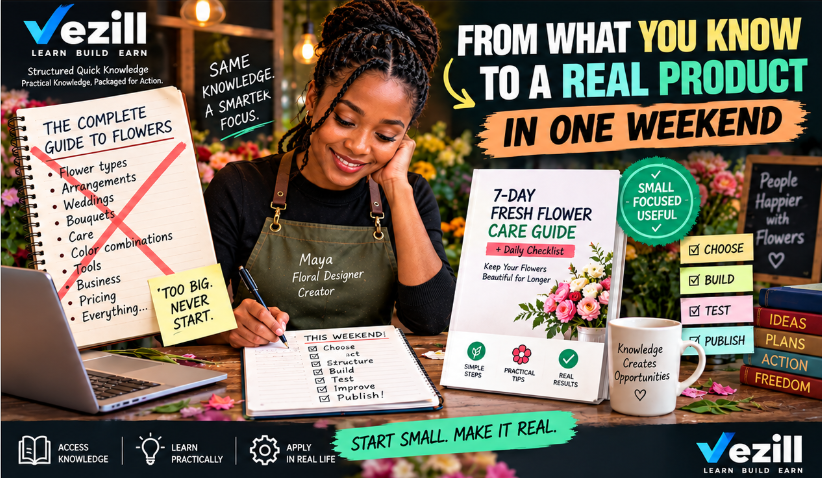
how to create your first knowledge product in one weekend
By Davie
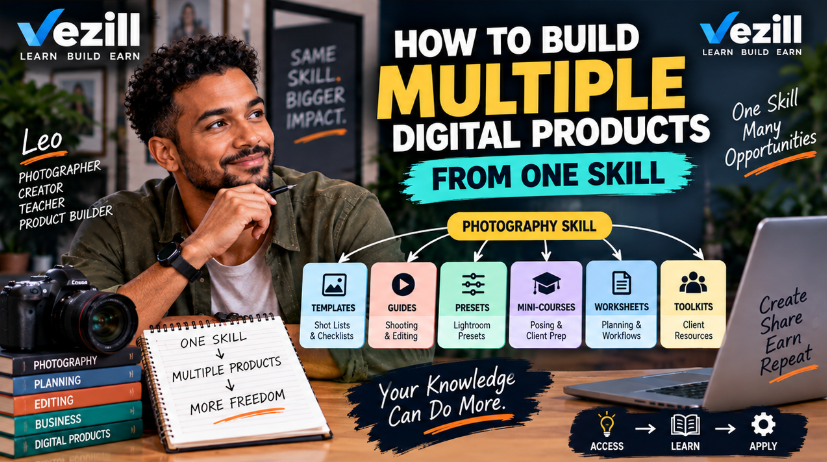
how to build multiple digital products from one skill
By Davie
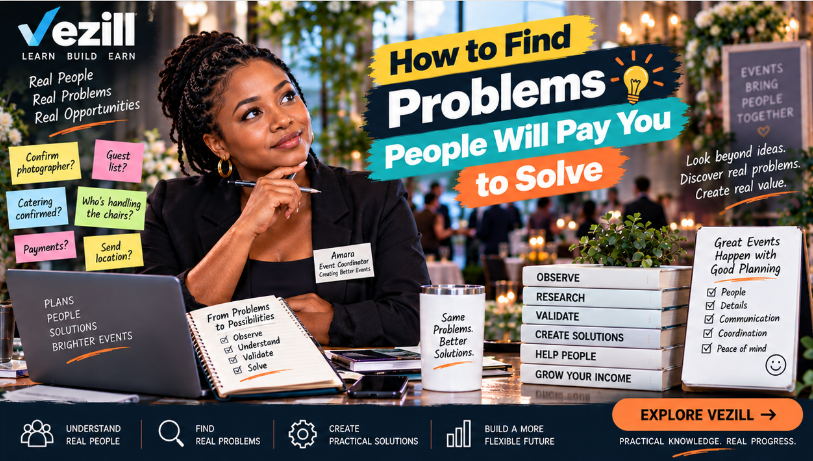
how to find problems people will pay you to solve
By Davie
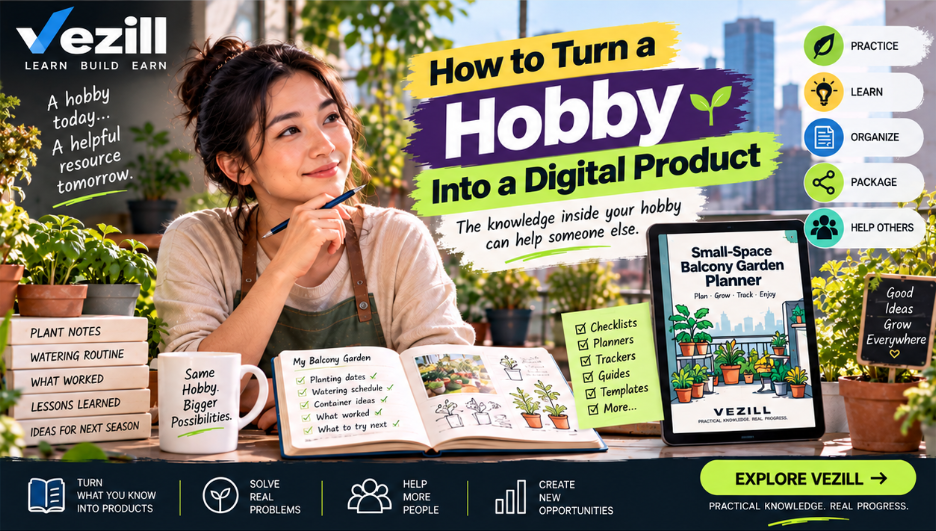
How to turn a hobby into a digital product
By Davie
Get the updates, on newly released, popular & fast-moving MRR digital products
Up to Top