
Complete 2027 Guide + Examples
CAREER SKILLS & JOB SEARCH • Updated September 2026 • 2027 Edition • Approx. 18-minute read
Learn how to write a professional, ATS-friendly CV for jobs in Kenya, including the right structure, examples, skills, achievements, keywords, formatting and common mistakes to avoid.
You find a job on LinkedIn, BrighterMonday, Fuzu, MyJobMag or a company careers page.
The requirements look almost perfect for you.
You apply.
Nothing.
A few days later, you see another vacancy. You meet most of the requirements, so you send the same CV again.
Still nothing.
After 20 or 30 applications, it is natural to start wondering:
“Am I underqualified, or is something wrong with my CV?”
Sometimes the issue is your qualifications or the jobs you are targeting. But sometimes a capable candidate has a CV that simply does a poor job of showing why they fit the vacancy.
A weak CV may be too generic, bury the most relevant experience, list duties instead of evidence, miss important terms from the job advertisement, contain outdated personal information or use formatting that is unnecessarily difficult for recruitment software to read.
Kenyan career guidance increasingly emphasizes relevance and clarity. The University of Nairobi's Career Services advises applicants to keep CVs precise and relevant to the role, while BrighterMonday's current ATS guidance recommends clear section headings, simple formatting, relevant keywords and measurable achievements. (University of Nairobi Career Services)
A strong CV therefore has a fairly simple job:
WHO ARE YOU?
WHAT CAN YOU DO?
WHAT HAVE YOU DONE?
WHY ARE YOU RELEVANT TO THIS PARTICULAR ROLE?
WHAT EVIDENCE SUPPORTS THOSE CLAIMS?
If a recruiter has to hunt through four pages to answer those questions, your CV is working against you.
A strong CV for jobs in Kenya should normally contain your name and contact information, a targeted professional summary, relevant skills, work experience or practical experience, education, certifications and relevant projects or achievements. Use a clean layout, standard headings and reverse-chronological experience where appropriate. Tailor the CV to the vacancy by using relevant terminology from the job description—but only for skills and experience you genuinely have. Focus on achievements rather than copying job descriptions, and keep unnecessary personal information out unless the employer specifically asks for it. For online applications, simple ATS-readable formatting is usually safer than highly decorative designs. (BrighterMonday)
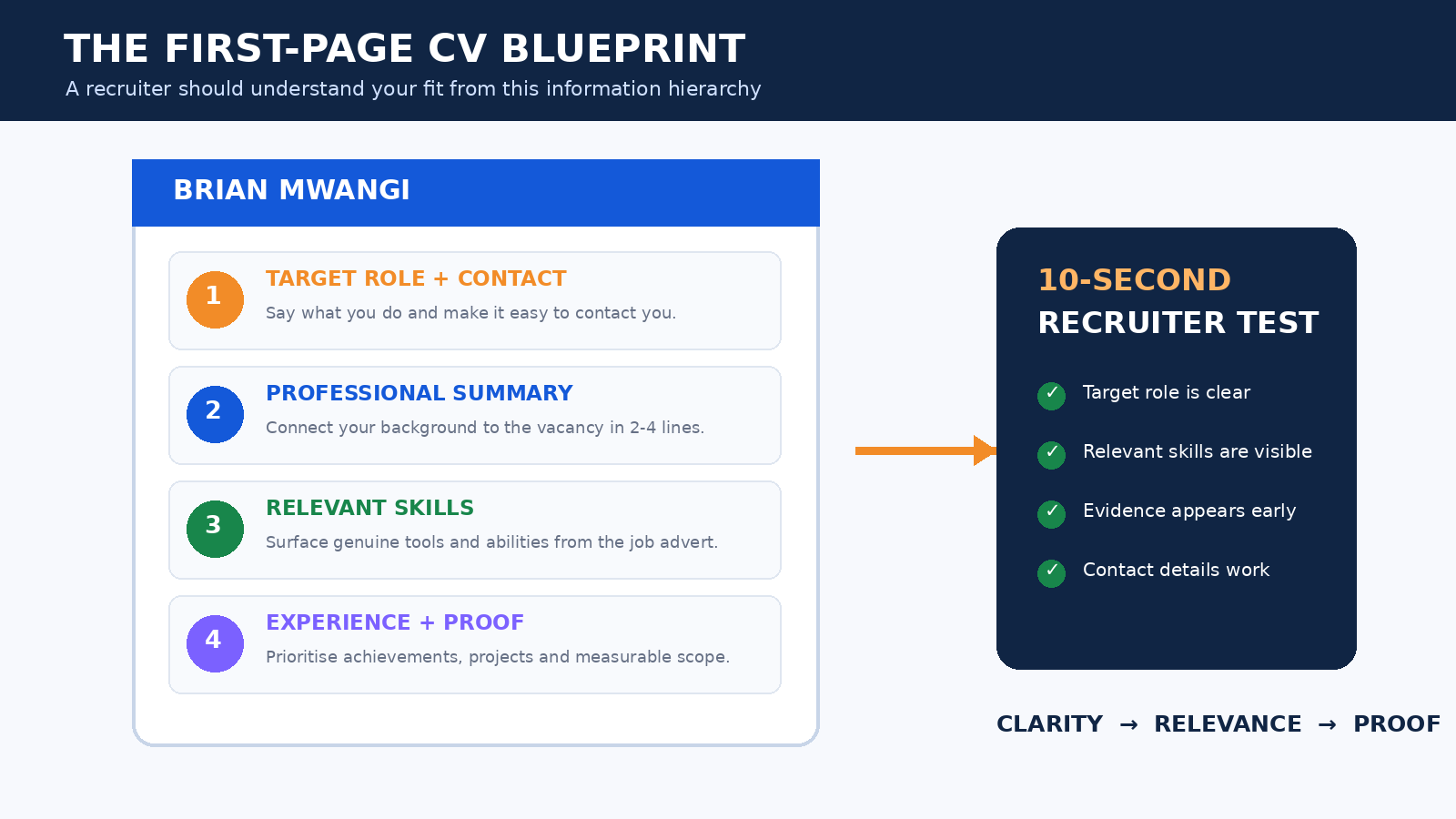
Figure 1. The first-page information hierarchy of a strong CV.
| Continue your job-search plan A strong CV works best as part of a complete application strategy. Read: How to Get a Job in Kenya • Explore Vezill career articles |
|---|
CV stands for Curriculum Vitae.
In everyday Kenyan recruitment, employers frequently use the term CV where some international employers might use résumé. Unless the vacancy itself distinguishes between the two, there is little value in worrying excessively about terminology.
Your CV is a structured summary of the professional information that helps an employer assess your fit.
It is not an autobiography.
A recruiter does not need every school you attended, every hobby you have had, every responsibility you have performed and every personal detail about your life.
The University of Nairobi's Career Services describes a CV as a professional synopsis and advises candidates to put important information early, keep it precise, relevant and easy to read. (University of Nairobi Career Services)
Open your CV and look only at the first half of the first page.
Can someone quickly identify your profession or target role, your strongest relevant skills, your recent or most relevant experience, your education level, at least one piece of evidence showing what you have achieved and a way to contact you?
If not, reorganize it.
For most private-sector and online applications, a good default is a clean reverse-chronological CV.
A practical structure is:
| Section | What it should contain |
|---|---|
| Name & Contact | Name, phone, professional email, location, LinkedIn/portfolio if useful |
| Professional Summary | Short explanation of your professional value |
| Core Skills | Skills relevant to the vacancy |
| Work Experience | Most recent/relevant roles, responsibilities and achievements |
| Education | Degree, diploma, certificates and relevant education |
| Certifications | Relevant professional or technical training |
| Projects | Especially valuable for graduates, developers, designers and analysts |
| Additional Information | Languages, licences or memberships only where relevant |
| Referees | If requested or appropriate for the application |
BrighterMonday's current ATS guide recommends contact information, a professional summary, work experience, education and skills using clear headings and a simple layout. (BrighterMonday)
If your education is currently your strongest qualification, you may place Education before Experience, particularly when your experience consists mostly of attachment, projects and volunteering.
Once you have substantial professional experience, your work history generally deserves greater prominence.
This is one area where older Kenyan CV templates can cause confusion.
Some old samples include age, marital status, religion and other personal information. Modern recruiter guidance is moving away from including information that does not help establish your suitability for the role.
Corporate Staffing's CV format guidance, updated in July 2026, specifically says to leave out marital status, ID number and religion unless requested in the advertisement. BrighterMonday similarly advises that age and marital status are unnecessary on a normal professional CV. (Corporate Staffing Services)
A practical approach is:
| Usually include | Optional if useful | Usually leave out unless requested |
|---|---|---|
| Full name | National ID number | |
| Active phone number | Portfolio | Religion |
| Professional email | City/county | Marital status |
| Relevant location | Professional website | Number of children |
| Languages relevant to role | Tribe/ethnicity | |
| Driving licence where relevant | Full residential address | |
| Nationality if genuinely relevant | Date of birth/age |
This is important.
There is no universal Kenyan application format.
Recent Kenyan job advertisements can explicitly ask candidates for age, marital status, copies of ID documents, referees or a passport photograph. For example, some 2026 university recruitment notices asked candidates to provide age and marital status as part of the application package, while a BrighterMonday-listed vacancy requested ID documents, three referees and a coloured passport photo. (Corporate Staffing Services)
So use this rule:
Do not permanently clutter every CV with personal information simply because one employer might ask for it. Follow the specific instructions in the vacancy.
For most private-sector applications, one to two well-used pages is a strong default.
BrighterMonday's ATS guidance recommends a focused one-to-two-page resume, and University of Nairobi Career Services advises keeping a normal job-seeking CV to a maximum of around two pages. (BrighterMonday)
That does not mean every professional on earth must have exactly two pages.
A useful rule is:
Student/fresh graduate: usually 1–2 pages
Early-career professional: usually 1–2 pages
Mid-career professional: commonly 2 pages, occasionally more if genuinely necessary
Senior specialist/executive: may need additional space
Academic/research CV: can be substantially longer because publications, teaching, research, conferences and grants may legitimately need documentation.
If your CV is four pages because you have listed primary school, every seminar attended, twelve hobbies and ten-year-old responsibilities, the solution is not a smaller font.
Remove weak information first.
| Strengthen the value behind your summary A targeted summary becomes more convincing when it reflects current, practical capabilities rather than generic personality words. Explore AI and digital skills for jobs • Explore Inceptor’s Digital Marketing course |
|---|
The professional summary is often wasted on sentences such as:
“I am a hardworking, self-motivated and goal-oriented individual seeking a challenging position in a reputable organization where I can utilize my skills.”
What did the recruiter learn?
Very little.
BrighterMonday specifically advises against generic descriptors such as “hardworking individual” and recommends using a summary that reflects your relevant skills and qualifications. (BrighterMonday)
Use this framework instead:
WHO YOU ARE + EXPERIENCE LEVEL + SPECIALIZATION + RELEVANT SKILLS + EVIDENCE + TARGET
Weak
Hardworking graduate looking for an opportunity to grow my skills.
Stronger
Business Administration graduate with six months of administrative attachment experience supporting records management, meeting coordination and Microsoft Excel reporting. Seeking an entry-level administration role where strong organization, documentation and customer-service skills are relevant.
Accountant with four years' experience in reconciliations, accounts payable, financial reporting and month-end support. Proficient in Excel and QuickBooks, with experience maintaining accurate transaction records and supporting audit preparation.
Digital marketing professional with three years' experience managing social media content, paid campaigns, SEO content and performance reporting for consumer brands. Experienced with Meta Ads Manager, Google Analytics and Canva.
Junior software developer with practical experience building React and Node.js applications, REST APIs and database-backed web products through freelance and personal projects.
Data analyst with experience using Excel, SQL and Power BI to clean operational data, build dashboards and translate business data into management reports.
Notice what is missing:
“Passionate.”
“Dynamic.”
“Visionary.”
“Results-oriented.”
Those words can be useful occasionally, but evidence is stronger.
A common mistake is copying your job description.
For example:
Social Media Assistant — ABC Ltd
Responsible for posting
Responsible for replying to comments
Responsible for reports
Responsible for Canva designs
That tells the recruiter what the position theoretically involved.
It does not show how you performed it.
A better formula is:
For example:
Planned and published 20–25 monthly Instagram and Facebook posts using Canva and Meta Business Suite, maintaining a consistent weekly content calendar.
Or, if you have verified performance data:
Reworked the monthly content calendar and increased average post engagement by 24% over three months.
Do not manufacture the 24%.
Kenyan recruiter guidance consistently encourages applicants to quantify achievements when possible and show impact instead of simply copying responsibilities. (Corporate Staffing Services)
Useful action verbs include created, managed, analyzed, coordinated, delivered, improved, automated, designed, implemented, reduced, increased, supported and generated.
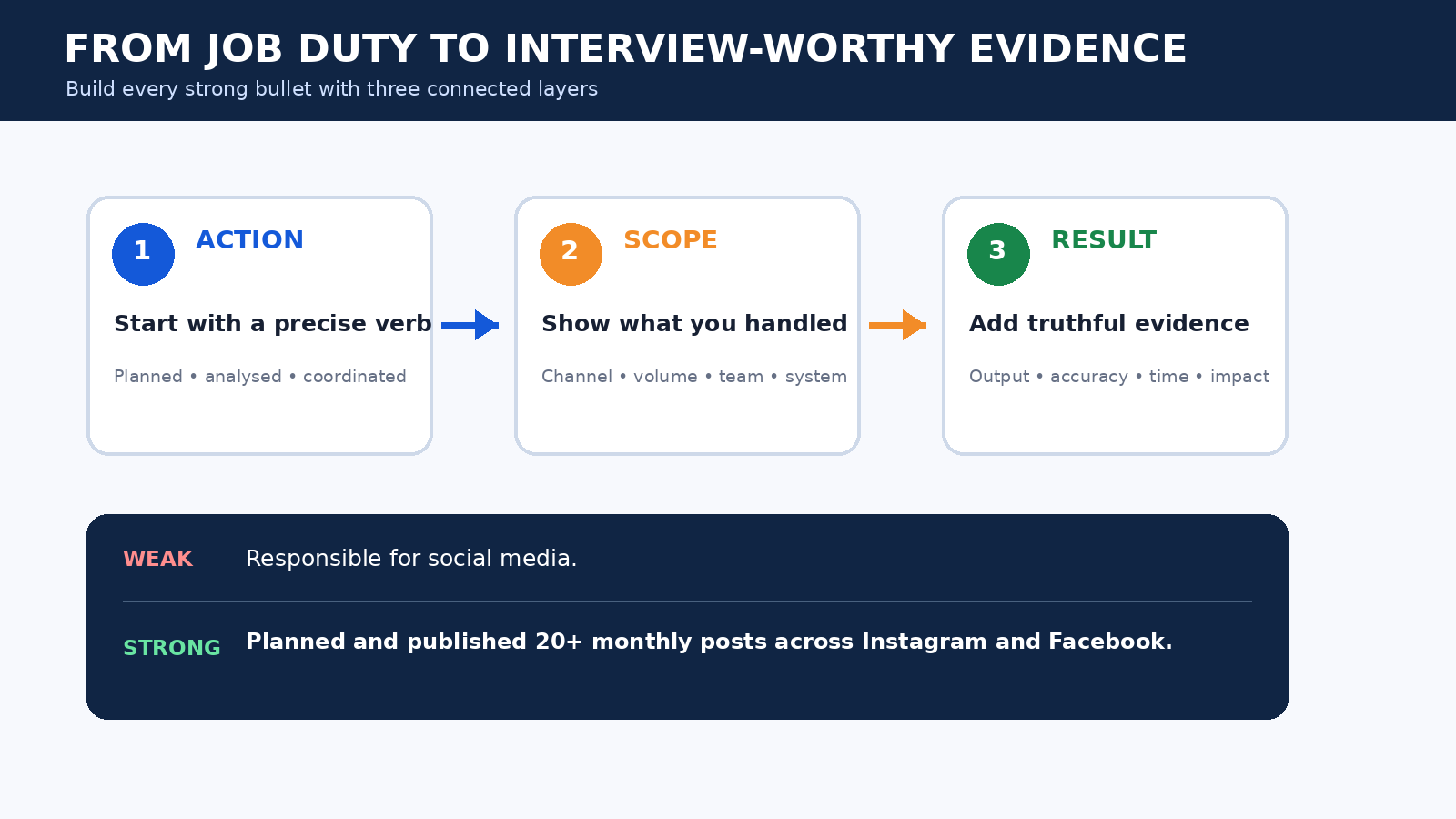
Figure 2. The action + scope + result formula for stronger CV bullets.
You do not need to be a salesperson generating millions of shillings to quantify your work.
You can quantify:
volume, frequency, projects, customers, team size, turnaround time, content output, records handled, accuracy, scope or process improvements.
Helped customers.
Handled approximately 30–40 walk-in and telephone customer enquiries per day and maintained accurate service records.
Managed social media.
Planned and published 20+ monthly posts across Instagram and Facebook.
Helped with the website.
Updated product information across 35 website pages and corrected mobile-layout issues across five key landing pages.
Assisted the accountant.
Supported weekly invoice reconciliation and filing for approximately 100 supplier and customer documents.
The number is useful only when it is true.
A believable CV with modest achievements is much stronger than a spectacular CV you cannot defend in an interview.
| Choose skills you can demonstrate If your CV needs stronger practical evidence, begin by identifying a skill you can learn, practise and show through a project. See digital skills Kenyans can build • Learn practical AI, SEO and Google Ads skills at Inceptor • Vezill digital product: Make Money Online as a Data Analyst |
|---|
Your skills section should primarily answer:
Which abilities from this vacancy can I genuinely demonstrate?
Separate technical or functional skills from unsupported personality traits.
Excel, QuickBooks, bank reconciliation, accounts payable, financial reporting, bookkeeping.
SEO, Meta Ads, Google Analytics, content strategy, email marketing, Canva, social-media management.
Excel, SQL, Power BI, Python, data cleaning, dashboards, data visualization.
Microsoft Office, Google Workspace, calendar management, documentation, records management, meeting coordination.
List the languages, frameworks, databases and tools you actually use: JavaScript, Python, React, Laravel, PostgreSQL, Git, APIs and so forth.
CRM platforms, ticketing tools, customer support, issue resolution, email support and telephone service.
Avoid a skills block that says only:
Teamwork | Leadership | Hardworking | Communication | Time Management
Those are difficult to assess without evidence.
Instead, demonstrate soft skills through experience:
Coordinated weekly deliverables between a five-person design and content team.
That communicates collaboration better than simply writing “team player.”
| Build the skills your CV claims Your CV becomes stronger when it is backed by practical, demonstrable ability. Practical training can also give you projects and results to discuss during applications. Explore Inceptor’s practical Digital Marketing course • Read Vezill’s guide to becoming a virtual assistant in Kenya |
|---|
ATS means Applicant Tracking System.
It is recruitment software used to collect, organize and search candidate applications. Depending on the employer and system, it can help recruiters identify candidates based on job titles, experience, qualifications, skills and keywords.
BrighterMonday describes ATS software as helping recruiters organize and filter applications and recommends formatting CVs so that important information can be parsed accurately. MyJobMag similarly markets CV optimization around both recruiters and applicant-tracking systems. (BrighterMonday)
However, avoid one common exaggeration:
Not every Kenyan company uses ATS, and an ATS is not a magical robot whose sole purpose is to reject you.
A smaller business may have an HR manager manually reading emailed CVs.
A multinational or large recruiter may use a sophisticated recruitment system.
Either way, a CV that is clean, logically structured and relevant works better for both software and humans.
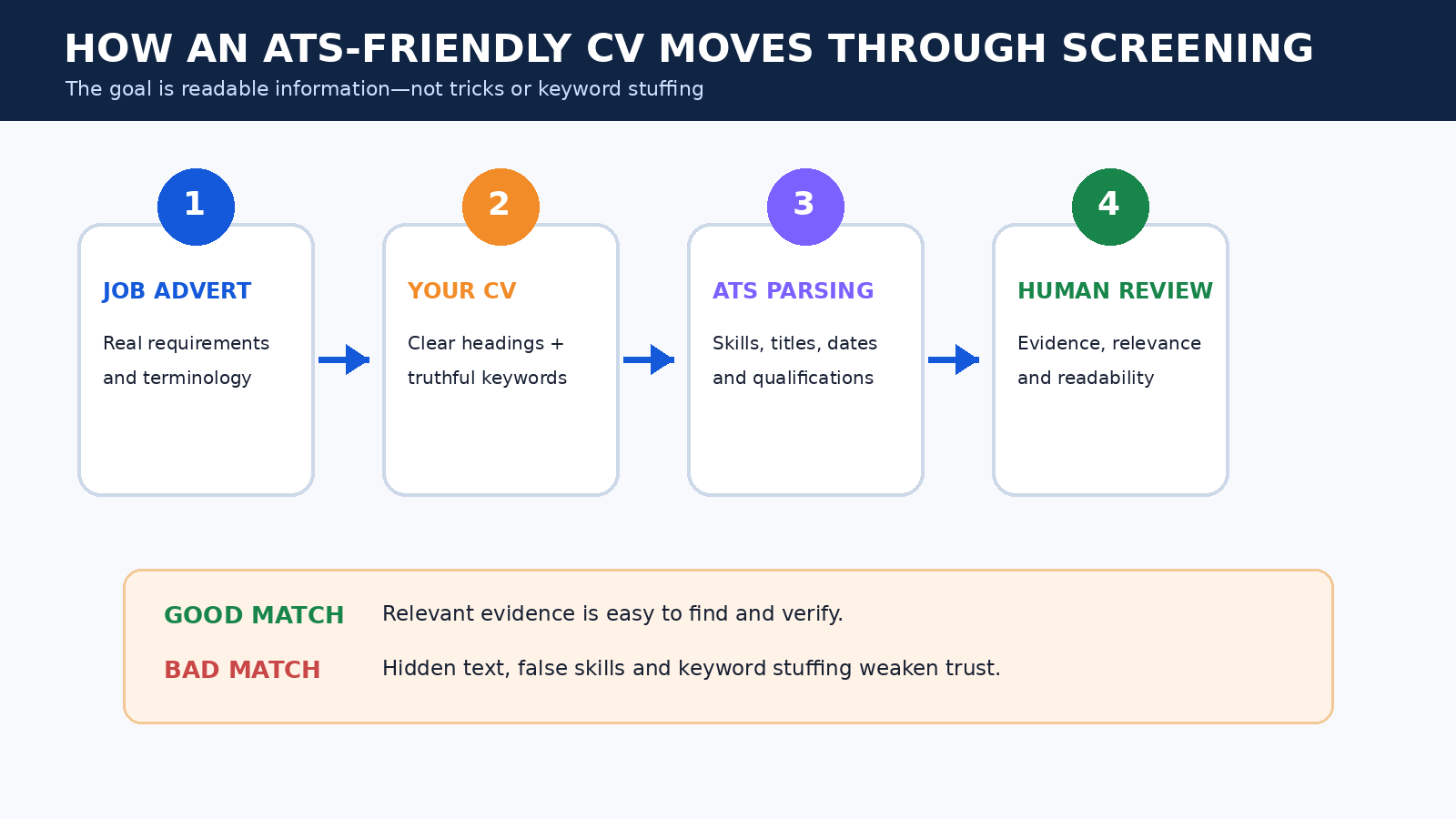
Figure 3. How clean CV structure supports software parsing and human review.
You do not need to turn your CV into a boring wall of text.
You need to make the information easy to interpret.
A strong ATS-safe default is:
Use a clean one-column layout.
Use familiar headings such as Work Experience, Education, Skills and Certifications.
Use readable fonts.
Keep important information out of decorative images.
Avoid excessive icons and graphics.
Avoid complicated text boxes and layouts.
Use standard bullet points.
Keep dates consistent.
Include relevant job-description keywords naturally.
Use a sensible file format.
Put contact information where it is easy to find.
BrighterMonday specifically recommends one-column formatting, standard headings, normal fonts and avoiding complicated graphics, tables and icons for ATS-focused applications. (BrighterMonday)
Your CV can still have good spacing, strong typography, subtle emphasis and clear hierarchy.
Think:
professional document
not:
graphic-design competition.
If you are applying for a highly creative role, you can maintain a separate portfolio where your design ability can shine.
Imagine a fictional vacancy says:
Requirements:
Social media management
Content creation
Google Analytics
SEO
Canva
Monthly reporting
Strong written communication
Those phrases tell you what matters to the employer.
Now compare them to your real experience.
If you genuinely have those abilities, make them visible.
Marketing, communication, computers, hardworking.
Social Media Management | Content Creation | Canva | SEO | Google Analytics | Performance Reporting
Then reflect them naturally in your experience:
Created weekly social-media content in Canva and prepared monthly performance reports using platform analytics.
The key is not to “beat” or “hack” ATS software.
It is to make the overlap between your real abilities and the employer's requirements explicit.
Kenyan recruitment advice from Corporate Staffing likewise recommends analyzing job descriptions, using industry terminology and incorporating relevant keywords naturally. (LinkedIn)
If the vacancy requires Power BI and you have never opened Power BI, adding it simply to get through screening is misrepresentation.
You still have to survive the interview.
| Connect your CV to a complete application strategy Tailoring the CV is one part of finding suitable vacancies, following instructions and preparing for interviews. Read the complete Vezill job-search guide |
|---|
One generic CV sent to 100 unrelated vacancies usually forces employers to do too much interpretation.
A better system is:
Your master CV contains everything:
all relevant jobs, projects, certifications, achievements, tools and skills.
For each serious application, create a copy and adjust it.
Read the vacancy carefully.
Highlight the five to ten most important requirements.
Remove or reduce unrelated information.
Move the strongest matching evidence upward.
Use the employer's terminology where it truthfully matches your experience.
Rewrite your summary for the target position.
Double-check the file name and application instructions.
The University of Nairobi has explicitly emphasized customizing CVs for each job description, and BrighterMonday's ATS guidance recommends incorporating job-specific keywords. (University of Nairobi Career Services)
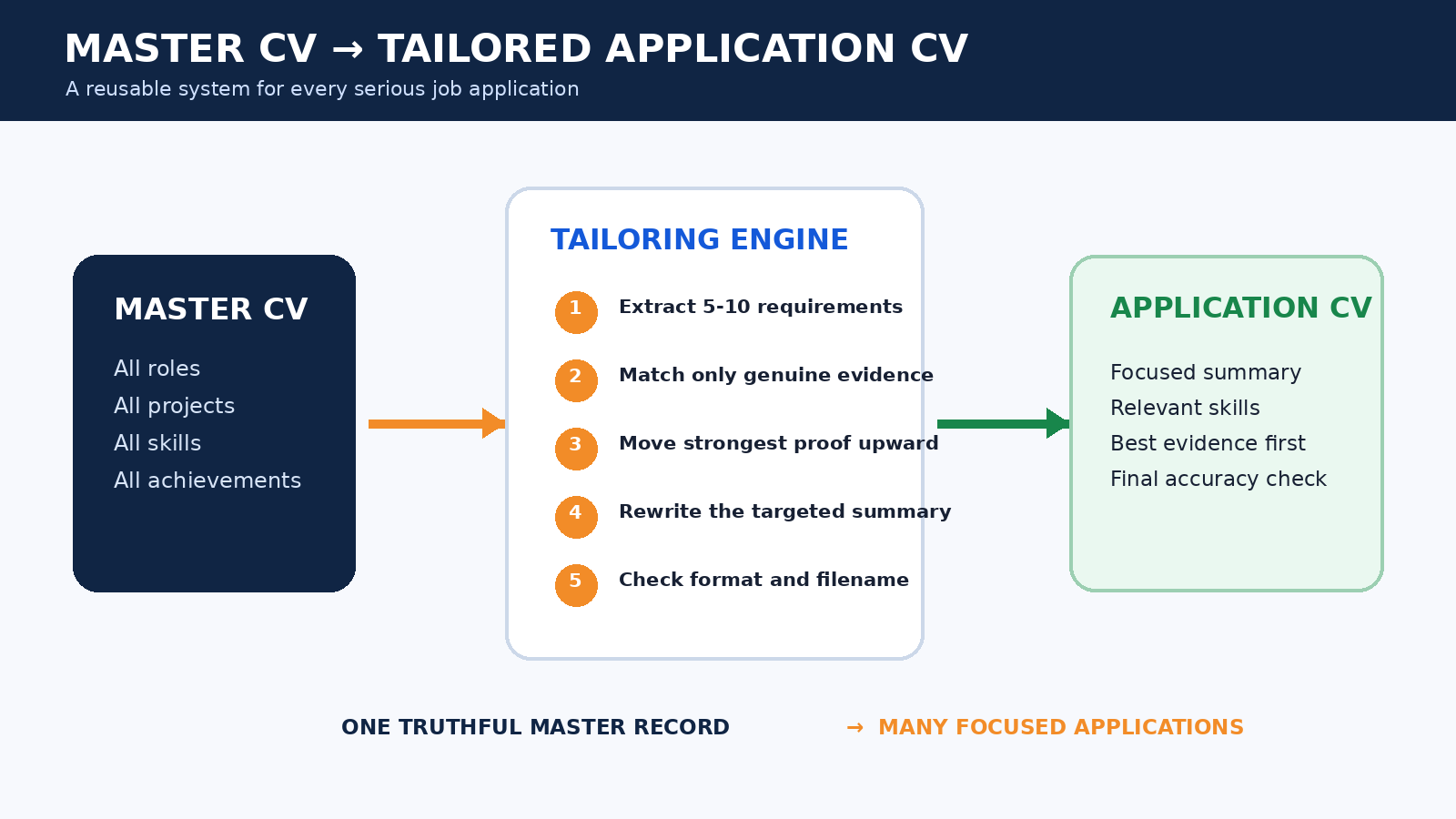
Figure 4. A practical workflow for tailoring a master CV to one vacancy.
This is one of the biggest problems fresh graduates face.
The important distinction is:
NO FORMAL JOB ≠ NO EXPERIENCE
You may already have evidence from internships, industrial attachment, volunteering, coursework, student leadership, clubs, freelance assignments, personal projects, open-source projects, community work or a family business.
Imagine you completed attachment in an HR office.
Do not write:
HR Attachment — learned many things about human resources.
Write:
HR Intern — ABC Company | May–August 2026
Assisted with interview scheduling and candidate documentation.
Updated employee records and organized personnel files.
Supported onboarding preparation for new staff.
Prepared basic Excel reports for the HR team.
Now you have professional evidence.
The same applies to university projects.
A data-science student who has never been formally employed but built a Power BI dashboard from a dataset can include a Projects section.
A developer can link to GitHub.
A designer can link to a portfolio.
A marketer can show sample campaigns.
| Build evidence while you are still a student Projects, legitimate online work and useful digital assets can give graduates stronger material for their CVs and portfolios. How students can make money online legally • Why tech students should build digital assets |
|---|
Here is a fictional example.
Nairobi, Kenya
07XX XXX XXX
brian.mwangi@email.com
linkedin.com/in/brianmwangi
Business and Digital Marketing graduate with six months of attachment experience supporting social-media content, customer communication and campaign reporting. Skilled in Canva, Meta Business Suite, Microsoft Excel and basic Google Analytics. Seeking a Junior Digital Marketing Assistant role.
Social Media Management | Content Creation | Canva | Microsoft Excel | Google Analytics | Customer Communication | Reporting
Bachelor of Commerce — Marketing
Example University
2023–2026
ABC Retail Ltd — Nairobi
January–June 2026
Planned weekly Facebook and Instagram content with the marketing coordinator.
Created 15–20 monthly social graphics using Canva.
Monitored comments and customer messages and escalated service issues.
Compiled monthly platform metrics into Excel reports.
Assisted with product-photo preparation for promotional campaigns.
30-Day Social Media Campaign — University Project
Developed a 30-day content strategy for a fictional Kenyan restaurant.
Created a content calendar, sample graphics and campaign metrics dashboard.
Google Analytics introductory training — 2026
Digital Marketing Fundamentals — 2025
Marketing Club — Communications Committee Member, 2024–2025
Brian does not pretend to have five years of experience.
He makes the six months he actually has visible.
The summary targets a specific role.
The skills reflect useful marketing tools.
The university project provides additional evidence.
That is much stronger than padding the CV with generic adjectives.
Now compare Brian with an experienced accountant.
Nairobi, Kenya
07XX XXX XXX
faith.njeri@email.com
LinkedIn: linkedin.com/in/faithnjeri
Accountant with six years' experience supporting monthly reporting, accounts payable, reconciliations, budgeting and audit preparation in retail and service businesses. Proficient in Excel and QuickBooks, with experience improving financial-record accuracy and month-end reporting processes.
Financial Reporting | Bank Reconciliation | Accounts Payable | Accounts Receivable | QuickBooks | Advanced Excel | Budgeting | Audit Support
2023–Present
Prepare monthly account reconciliations across company operating accounts.
Process and verify supplier invoices before scheduled payment runs.
Support month-end reporting and audit-document preparation.
Introduced a standardized invoice-tracking worksheet that reduced missing-document follow-ups.
Support junior finance staff during reporting periods.
2020–2023
Maintained supplier and customer account records.
Assisted with bank reconciliation and petty-cash control.
Prepared weekly collections and outstanding-payment summaries.
The experienced professional does not need to lead with university club activities.
Their career evidence now matters more.
Use a simple structure:
Qualification
Institution
Year completed
For example:
Bachelor of Science in Information Technology
Example University
2026
A fresh graduate can include relevant coursework or academic projects if those strengthen the application.
A professional with ten years of experience generally does not need to describe ordinary university coursework.
KCSE can still be appropriate for graduates or employers that specifically request it.
Primary-school information is rarely useful in a modern professional CV unless there is an unusual application requirement.
Kenyan practice varies more here than international generic advice sometimes suggests.
Some Kenyan recruiters and institutions still request referees. Corporate Staffing recommends selecting professional referees carefully and, importantly, obtaining their permission before listing them. Some institutional job advertisements explicitly request names and contact details for three referees. (Corporate Staffing Services)
Therefore:
Provide them.
Typically include:
Name
Position
Organization
Professional email
Phone number if requested
You can either omit the section or use the space for more valuable information.
You do not necessarily need to write:
“References available upon request.”
Employers already understand that they can request references.
Most importantly:
Never list someone without telling them.
For most professional applications, a photograph is not automatically necessary.
A photo uses valuable space and usually tells the recruiter little about your ability to perform the job.
However, Kenyan recruitment is not completely standardized.
Some employers specifically ask applicants to provide a passport photograph, as seen in recent vacancies. (BrighterMonday)
So the sensible rule is:
Do not include a photograph by default simply because an old CV template has one.
Do include one when the application instructions explicitly request it or when there is a legitimate role-specific reason.
Follow the vacancy.
Both PDF and DOCX can be valid.
BrighterMonday's ATS guidance says simple Word or PDF files can work, depending on the system. (BrighterMonday)
The most important rule is:
FOLLOW THE APPLICATION INSTRUCTIONS.
If the advertisement asks for PDF, send PDF.
If it asks for Word, send DOCX.
If nothing is specified, a clean PDF is often a practical choice because the formatting is more likely to remain visually consistent, while DOCX may be preferable in some ATS workflows.
Good
`Brian-Mwangi-CV.pdf`
`Brian-Mwangi-Digital-Marketing-CV.pdf`
Poor
`cv-new-final-final2.pdf`
`document1.pdf`
`mycv.pdf`
This seems minor until a recruiter downloads 150 files named `CV.pdf`.
Sending the exact same generic CV everywhere.
Using an unprofessional email address.
Writing a meaningless summary full of adjectives.
Filling the CV with irrelevant personal details.
Making the document unnecessarily long.
Copying job descriptions instead of showing achievements.
Hiding useful skills deep in the document.
Ignoring important vocabulary from the vacancy.
Stuffing keywords unnaturally.
Using overly complicated layouts for online applications.
Claiming software skills you cannot demonstrate.
Inventing jobs or inflated achievements.
Leaving outdated phone numbers or email addresses.
Sending a confusing filename.
Failing to follow the employer's application instructions.
One more deserves special mention:
If you maintain several tailored versions, open the attachment before clicking Send.
“Brian-Mwangi-Accounting-CV.pdf” attached to a marketing application is not a great first impression.
| Use AI to improve real skills—not invent experience AI can help with analysis, practice and presentation, but the strongest applications still rely on work you can genuinely demonstrate. Explore high-demand AI and digital skills • See practical AI product and career ideas |
|---|
Yes—but use AI as an editor and analyst, not as a fictional-biography generator.
AI can help you compare your CV against a job advertisement, identify terminology you may have overlooked, improve bullet-point clarity, rewrite an overly generic summary, proofread, prepare cover letters and generate practice interview questions.
But AI should never invent your experience.
BrighterMonday's terms for its own AI-assisted career services explicitly remind users that AI-generated professional materials should be reviewed for accuracy. (BrighterMonday)
Prompt 1 — Job-description comparison
Compare the job description below with my CV. Identify important skills and terminology in the vacancy that are missing or underemphasized in my CV. Only use experience I have actually provided. Do not invent qualifications, jobs, skills or achievements.
Prompt 2 — Improve work-experience bullets
Rewrite these CV bullet points so that they begin with strong action verbs and emphasize outcomes where my information supports them. Do not invent percentages, numbers or results.
Prompt 3 — Professional summary
Based only on the experience below, write a 60–80-word professional summary for a [JOB TITLE] application. Prioritize the qualifications that best match the job description and remove generic phrases such as hardworking and self-motivated.
Prompt 4 — ATS vocabulary
Extract the 15 most important job-specific skills, tools, qualifications and phrases from this vacancy. Then tell me which ones appear in my CV. Do not recommend adding anything I cannot genuinely claim.
Prompt 5 — Final review
Review my CV as a recruiter hiring for the vacancy below. Identify unclear sections, unsupported claims, irrelevant information, missing evidence, spelling issues and areas where the strongest experience should be moved higher. Do not rewrite facts.
AI is most useful when it helps you express the truth better.
Use this two-minute check.
Is your phone number correct?
Is your email professional?
Does the summary clearly match this vacancy?
Are relevant genuine skills visible?
Have you shown evidence rather than only duties?
Are employment and education dates consistent?
Is everything easy to scan?
Is it the requested format?
Does the employer know whose document it is?
Then use the 10-second recruiter test:
Look at page one for ten seconds.
Can you understand why this candidate deserves further attention?
Think of them differently.
It shows your experience, skills, education and results.
It explains why this particular role and organization make sense for you.
Not every employer asks for a cover letter.
When one is requested, do not simply repeat the CV in paragraph form.
Use it to connect your strongest evidence to the employer's problem.
This is also why the next logical resource in a strong career-skills library is How to Write a Cover Letter for Jobs in Kenya.
You can copy this structure and replace the placeholders.
FULL NAME
Phone | Professional Email | City/County | LinkedIn | Portfolio
PROFESSIONAL SUMMARY
[2–4 concise sentences explaining your professional background,
relevant strengths and target role.]
CORE SKILLS
[Relevant Skill] | [Relevant Skill] | [Relevant Skill] |
[Relevant Skill] | [Relevant Skill]
WORK EXPERIENCE
JOB TITLE
COMPANY | LOCATION
MONTH YEAR – MONTH YEAR
• Achievement/result
• Achievement/result
• Relevant responsibility with context
• Relevant responsibility with scope/result
JOB TITLE
COMPANY | LOCATION
MONTH YEAR – MONTH YEAR
• Achievement/result
• Relevant responsibility
• Relevant responsibility
EDUCATION
QUALIFICATION
INSTITUTION
YEAR
CERTIFICATIONS
Certification | Institution | Year
PROJECTS
PROJECT NAME
• What you built/did
• Tools/skills used
• Result/output
ADDITIONAL RELEVANT INFORMATION
Languages:
Professional memberships:
Driving licence:
Other relevant information:
REFEREES
Include only when appropriate or requested.
This structure follows the article brief you provided, which specifically required a practical, ATS-focused Kenyan CV guide with examples rather than generic tips.
Consider this fictional entry.
Profile
I am a hardworking and self-motivated person looking for a challenging opportunity in a reputable company where I can utilize my skills and grow professionally.
Skills
Hardworking, communication, teamwork, computer skills.
Experience
Social Media Intern
ABC Company
- Responsible for social media
- Made posts
- Helped customers
- Designed posters
This tells us almost nothing.
Professional Summary
Junior digital marketer with six months of internship experience supporting social-media content, customer engagement and campaign reporting. Skilled in Canva, Meta Business Suite and Excel, with hands-on experience planning and publishing multi-platform content.
Core Skills
Social Media Management | Canva | Content Planning | Meta Business Suite | Excel Reporting | Customer Communication
Digital Marketing Intern — ABC Company | Jan–Jun 2026
Planned and published approximately 20 social-media posts per month across Instagram and Facebook.
Created campaign graphics using Canva within company brand guidelines.
Monitored social comments and messages and escalated customer-service issues.
Compiled monthly social-performance figures into Excel reports for the marketing team.
Nothing magical happened.
We simply converted vague claims into relevant evidence.
| Keep building while you apply If hiring takes time, continue improving your portfolio and consider a small, honest income experiment connected to a skill you already understand. What to build or resell while searching for work • Read Inceptor’s guide to making money online • Explore Inceptor’s Digital Product Trading Masterclass |
|---|
Do not automatically conclude:
“My CV is bad.”
Diagnose the problem.
Are you applying for jobs where you meet most of the essential requirements?
If a role requires five years of audit experience and CPA(K), changing the font on your CV cannot fix the fact that you have neither.
Are your relevant skills and experience actually visible?
Are you sending the same generic application to unrelated jobs?
Do you state skills but provide no proof?
For careers such as development, design, writing, marketing and analytics, would a portfolio strengthen your application?
Are you following instructions and submitting all required materials?
Sometimes a perfectly good candidate does not get an interview because another applicant is simply a closer match.
Your objective is not to create a CV that guarantees interviews.
No document can guarantee that.
Your objective is to ensure that a recruiter can accurately see the strongest case for interviewing you.
Before your next application, make sure your CV is:
Relevant: written for the kind of position you are pursuing.
Clear: easy for a recruiter to scan.
Truthful: every qualification and achievement can be defended.
Evidence-based: achievements and practical examples support your claims.
ATS-conscious: simple structure, recognizable headings and relevant terminology.
Tailored: your strongest matching evidence is prominent.
Current: contact information, employment dates and certifications are up to date.
Professional: no careless filename, spelling errors or distracting clutter.
One Kenyan employer may ask for referees.
Another may ask for a passport photo.
Another may use an online ATS and ask for nothing beyond the CV.
That is precisely why the best general rule is not to memorize one rigid “Kenyan CV format.”
It is to build a strong master CV, understand modern recruitment principles and then follow the instructions for each specific vacancy.
That skill is much more valuable than downloading a beautiful template and sending it unchanged to every employer.
For most job applications, use a clean reverse-chronological format with contact information, professional summary, relevant skills, work experience, education, certifications and relevant projects. Keep the layout simple enough for both recruiters and applicant-tracking systems to read. (BrighterMonday)
For most students, graduates and early- to mid-career professionals, one to two focused pages is a good target. More experienced or academic candidates may legitimately need longer documents. (University of Nairobi Career Services)
Not by default. Most professional roles can be assessed without a photograph. However, some Kenyan employers explicitly request a passport photograph, so always follow the vacancy instructions. (BrighterMonday)
Usually not unless the employer specifically requests it. Corporate Staffing's updated Kenyan CV guidance specifically lists ID number among the personal details to leave out unless requested. (Corporate Staffing Services)
For a normal professional CV, it is usually unnecessary. BrighterMonday and current Corporate Staffing CV guidance advise leaving marital status out of the standard CV, although certain Kenyan institutional vacancies may specifically request it. (BrighterMonday)
Prioritize skills relevant to the vacancy and that you genuinely possess. A data analyst might list Excel, SQL and Power BI; a marketer might list SEO, Meta Ads and Google Analytics. Avoid filling the section with generic personality words that you cannot demonstrate.
Use internships, industrial attachment, university projects, volunteering, freelance assignments, personal projects, clubs and relevant community work as evidence. Describe what you actually did, the skills involved and any measurable output.
If the employer requests referees, provide appropriate professional contacts and ask their permission first. If no references are requested, you may choose to use that space for more relevant evidence. Kenyan employers vary in this practice. (Corporate Staffing Services)
An ATS-friendly CV is structured so recruitment software can reliably interpret its content. It typically uses clear headings, standard fonts, simple formatting, meaningful keywords and avoids unnecessarily complicated graphics or text boxes. (BrighterMonday)
Either may be acceptable. The safest rule is to use whatever format the job advertisement requests. BrighterMonday notes that straightforward DOCX or PDF formats can be suitable depending on the application system. (BrighterMonday)
Compare the vacancy against your master CV, identify the employer's main requirements and move the strongest matching evidence higher. Adjust your summary, skills and experience wording using relevant job-description terminology where it truthfully reflects your background.
Yes, AI can help organize, edit and tailor a CV, but you must review everything. Never allow AI to invent jobs, qualifications, achievements, metrics, skills or referees.
Relevance and evidence. A recruiter should quickly see what role you fit, what relevant skills you have and what you have actually accomplished. Clear structure and strong examples usually matter more than decorative design.
Your CV may be one factor, but it may also be role mismatch, intense competition, weak targeting, missing qualifications, poor application execution or insufficient evidence of your skills. Review the entire job-search process rather than assuming the document is the sole problem.
| Ready to move from reading to action? Continue with a focused guide, product or practical course that supports the next step in your career. Choose only resources whose descriptions match the help you need. Read: How to Get a Job in Kenya • Vezill product: Make Money Online as a Data Analyst • Inceptor Digital Product Trading Masterclass |
|---|
Discover more articles you might be interested in

how to create your first knowledge product in one weekend
By Davie
how to build multiple digital products from one skill
By Davie
how to find problems people will pay you to solve
By Davie

How to turn a hobby into a digital product
By Davie
Get the updates, on newly released, popular & fast-moving MRR digital products
Up to Top
Comments All
Peter mutisya
@peter_mutisya
Really enjoyed reading this! I like how the article breaks down CV writing into simple and practical steps. The tip about tailoring your CV to each job stood out to me because it can really make a difference. Definitely a helpful read for anyone job hunting in Kenya. 👏
September 03,2026 At 09:56 PM